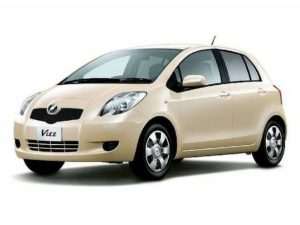
The interior is where Toyota's small-car engineering becomes particularly impressive. The Vitz does not have acres of space, because obviously Toyota did not secretly build a minivan and hide it inside a hatchback. Instead, it uses the available space efficiently.
The cabin is upright and airy, with good visibility through the large windows. The front seats provide a comfortable driving position, while the rear bench is surprisingly usable for a compact car. For daily Dhaka driving, that matters considerably more than a fashionable dashboard.
The centre-mounted instrument cluster is one of the Vitz's most distinctive features. It looks unusual today, but the information is easy to read and the layout keeps the driver's sightline relatively uncluttered.
The 1.3 F uses straightforward equipment and fabric upholstery rather than luxury materials. Air conditioning, power windows, central locking, power steering and folding rear seats provide the things that actually matter during daily use.
Of course, age is now unavoidable. A 2005–2010 Vitz can have worn seat fabric, faded plastics, scratched trim and tired switches. Some cars have been heavily modified with aftermarket multimedia systems, reverse cameras and other accessories.
The cabin's biggest achievement is practicality. It feels bigger inside than the exterior suggests, the controls are simple and the rear seating is useful.
It is not luxurious, but it is remarkably functional.