4.0 Expert Rating

Toyota Supra MK3 (1993-2002) Expert Review

Extensively tested and reviewed by Team CarHub

EXPERT VERDICT
"
Toyota Supra MK4 is an iconic twin-turbo sports car with extraordinary tuning potential, thrilling performance
AT A GLANCE

Pros & Cons

✓
WHAT WE LIKE

Good Things

  • ✓
    Iconic timeless styling
  • ✓
    Iconic 1980s styling
  • ✓
    Legendary 2JZ-GTE engine
  • ✓
    Exceptional tuning potential
−
WHAT COULD BE BETTER

Could Be Better

  • −
    Extremely expensive locally
  • −
    Very poor fuel economy
  • −
    Limited rear-seat practicality
  • −
    Difficult parts sourcing
Toyota Supra MK3 (1993-2002)
— 48 Reviews
৳ 1.00 Crore - 1.50 Crore

Exterior

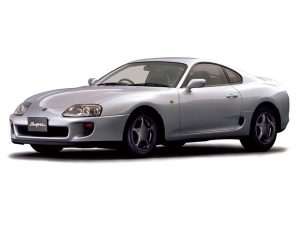
Toyota Supra MK4 is one of those cars that makes modern automotive styling look slightly overcomplicated. Toyota took a simple formula — long bonnet, short cabin, wide rear haunches and a giant rear spoiler — and somehow produced one of the most recognizable shapes of the 1990s.

The A80 measures around 4,515mm long, 1,810mm wide and only about 1,265–1,275mm tall. That low roof and wide stance give it the proportions of a serious grand-tourer rather than an ordinary Japanese coupe. Toyota's UK launch specification confirms the 4,515mm length, 1,810mm width, 2,550mm wheelbase and 135mm ground clearance.

The front end is dominated by smooth aerodynamic surfaces and retractable headlights. There are no unnecessary decorative creases. The design flows from front to rear, with the huge rear wing providing both visual drama and genuine aerodynamic purpose.

The Supra's most famous feature is arguably its rear three-quarter view. The rounded tail, integrated spoiler and broad stance make the car immediately recognizable even from a distance.

For Bangladesh, the wide body does require attention. At 1,810mm, it is substantially wider than many ordinary Toyota sedans, while the low nose and 135mm clearance demand care around speed breakers.

But visually, this is where the MK4 absolutely earns its reputation. It looks special even when parked.

Interior

MK4 interior follows the same philosophy as the exterior: put the driver at the centre and remove distractions.

The dashboard curves around the driver, placing the major instruments and controls within easy reach. The large analogue tachometer and speedometer provide exactly the information you actually need, while the low seating position gives the driver a proper sports-car sensation.

The front seats are the star of the cabin. They hold you securely without feeling like racing equipment has been installed in your living room. Long-distance driving is surprisingly comfortable for a car with this much performance.

The rear seats are a different story. Calling them proper adult seating would be generous. They are useful for children or short journeys, but the MK4 is fundamentally a two-person car with occasional rear capacity.

The liftback design is clever because it gives the Supra useful cargo access without sacrificing the coupe silhouette. Toyota's UK specification lists 185 litres of boot capacity with the seats up and 317 litres with them down.

Naturally, the interior now feels old compared with a 2026 vehicle. There is no massive screen, wireless phone charging or digital dashboard.

Yet that simplicity is part of its appeal. You sit down, turn the key, see the tachometer and immediately understand that the car wants to be driven rather than connected to your smartphone.

Features

MK4 was remarkably sophisticated for a 1990s Japanese sports car.

Power steering, power windows, air conditioning, cruise control, electric seats, premium audio, sunroof or removable roof equipment and alloy wheels were available depending on grade and market. Japanese specifications also offered different equipment packages across SZ, SZ-R, RZ, RZ-S and GZ versions.

The engineering underneath the equipment is even more interesting.

The A80 used four-wheel independent suspension and a sophisticated chassis designed to provide both high-speed stability and usable road manners. The 2JZ-GTE used sequential twin turbochargers, rather than a simple single-turbo arrangement. Toyota's UK technical documentation confirms the 24-valve inline-six and sequential twin-turbo system.

The six-speed Getrag manual is another major part of the MK4 story. Japanese turbo versions could also use a four-speed automatic, making the car considerably easier to operate in traffic.

What the MK4 lacks is obvious today. There is no factory touchscreen, smartphone integration, adaptive cruise control, automatic emergency braking or connected-car system.

But if you are buying an MK4 for its technology, you have misunderstood the assignment.

The important features are the 2JZ-GTE, sequential turbos, rear-wheel drive, six-speed manual and sophisticated chassis.

Safety

MK4's safety equipment must be judged against its 1990s era rather than a modern 2026 vehicle.

The A80 benefited from a strong chassis, four-wheel disc brakes and ABS on appropriate specifications. Driver and passenger airbags were also available depending on market and model year. Toyota's period documentation confirms the car's substantial 1,585kg manual kerb weight in UK specification and 1,960kg gross vehicle weight.

However, this is where modern cars have moved several generations ahead.

There is no autonomous emergency braking, lane-keeping assistance, blind-spot monitoring, adaptive cruise control, traffic-sign recognition or rear cross-traffic warning. The driver is responsible for almost everything.

In Bangladesh, the condition of the individual car becomes especially important. A thirty-year-old performance vehicle with worn tyres, tired suspension, old brake components or questionable modifications should not be treated like a modern factory-fresh sports car.

Tyres deserve particular attention. The turbo Supra can generate serious acceleration, and poor-quality tyres can dramatically compromise traction.

The same applies to modifications. Bigger turbochargers, aftermarket engine management, larger injectors and altered suspension may improve performance, but poorly installed equipment can create reliability and safety problems.

So the MK4 has a strong mechanical foundation, but it lacks almost all of the electronic safety assistance you would expect from a modern performance car.

Driving Experience

This is the bit that explains the entire legend.

The 2JZ-GTE is a 2,997cc inline-six with DOHC, 24 valves and sequential twin turbochargers. JDM cars were officially rated at 280 PS, while US-market versions were rated at 320 hp. The JDM specification later increased torque to approximately 451 Nm on VVT-i versions.

The engine is smooth, strong and unusually tolerant of modification when properly maintained. The sequential turbo system provides strong mid-range response while the inline-six delivers the smoothness expected from a grand-tourer.

Then there is the chassis.

The A80 is rear-wheel drive, relatively low and wide, with excellent weight distribution. The steering feels connected, the body remains composed and the car feels planted as speed increases.

The six-speed manual transforms the experience. Every gear change feels deliberate, and the engine's torque makes the car feel much faster once the turbos are working.

In Bangladesh, however, you need somewhere to use it. Dhaka traffic is not that place. Sitting in bumper-to-bumper traffic with a rare turbocharged Supra is like owning a racehorse and making it pull a rickshaw.

Give it an open highway, good tyres and smooth asphalt, however, and the A80 becomes something else entirely.

It is fast, stable, mechanical and deeply satisfying.
EXPLORE THE RANGE

Variants

MK4 range was considerably broader than simply “2JZ twin turbo.”

Japanese-market cars included the naturally aspirated SZ and SZ-R, while turbocharged models included RZ, RZ-S and GZ, with equipment and drivetrain specifications varying across production years.

The naturally aspirated 2JZ-GE produces substantially less power than the 2JZ-GTE and is easier to operate as a relaxed grand-tourer. The turbo models are the cars most enthusiasts associate with the Supra legend.

The RZ is particularly important because it could combine the 2JZ-GTE with the six-speed Getrag manual transmission and performance-oriented equipment. The RZ-S offered the turbo engine with different equipment and specification levels.

Export markets had their own differences. The United States received naturally aspirated and twin-turbo models, while UK/European-market cars were sold with the turbocharged engine.

For Bangladesh, the actual car in front of you matters more than the badge. Engine swaps, turbo conversions, manual conversions, aftermarket ECUs and extensive body modifications are common possibilities with an old performance car.

A genuine factory JZA80 with a documented 2JZ-GTE, correct gearbox and strong chassis is a fundamentally different proposition from a converted shell.

That is what makes buying an MK4 fascinating — and potentially expensive.
TRENDING

Trending Toyota Cars

View All Toyota Cars
FAQ

Toyota Supra MK3 (1993-2002) Questions & Answers

Toyota Supra MK4 (1883-2002) price in Bangladesh is possibly ৳ 1 - 1.5 crore, but very hard to find one!

View All Toyota Supra MK3 (1993-2002) FAQs
📍

Find Dealers Near You

Looking for Toyota Supra MK3 (1993-2002) ? We will notify you when verified dealers become available.

💳

Calculate Your Car EMI

Estimate your monthly payment for Toyota Supra MK3 (1993-2002)

৳ 30,00,000
৳5L ৳1Cr
৳ 5,00,000
৳0 ৳30L
9%
5% 18%
5 Years
1 Year 7 Years
Your Monthly EMI ৳ 64,250 Estimated payment per month
Principal Amount ৳ 30,00,000
Total Interest ৳ 7,68,000
Total Payment ৳ 37,68,000