4.5 Expert Rating

Toyota Passo 2nd Gen (2010-2016) Expert Review

Extensively tested and reviewed by Team CarHub

EXPERT VERDICT
"
Toyota Passo 2010–2016 is an economical, practical and easy-to-drive hatchback that suits Bangladesh city life, but performance remains modest.
AT A GLANCE

Pros & Cons

✓
WHAT WE LIKE

Good Things

  • ✓
    Excellent fuel economy
  • ✓
    Easy city maneuverability
  • ✓
    Reliable Toyota engine
  • ✓
    Affordable maintenance costs
−
WHAT COULD BE BETTER

Could Be Better

  • −
    Modest 1.0L performance
  • −
    Basic interior materials
  • −
    CVT needs proper maintenance
  • −
    Limited safety
Toyota Passo 2nd Gen (2010-2016)
— 47 Reviews
৳ 8.00 Lakh - 16.00 Lakh

Exterior

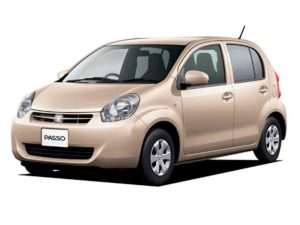
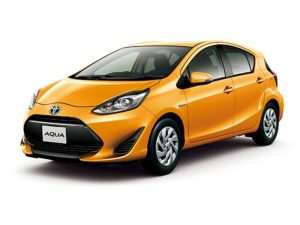
The second-generation Toyota Passo is what happens when Toyota decides that a car should be useful before it is dramatic. It is small, tall and remarkably clever with its space. In Bangladesh, that is not an insult. It is practically a superpower. At roughly 3.65 metres long and 1.665 metres wide, the Passo is perfectly suited to the sort of urban driving where roads suddenly become parking lots and parking lots suddenly become roads. The short body and tight turning radius make U-turns, parallel parking and squeezing through narrow Dhaka lanes considerably easier than with a conventional sedan. Toyota's second-generation model measured 3,640–3,650mm depending on grade, with a 2,440mm wheelbase. The design changed through the years. The normal X grades look clean and simple, while the Plus Hana brings a more decorative face with rounder styling and distinctive grille and lamp treatment. The later facelift also improved the exterior equipment, including auto-folding mirrors and upgraded lighting depending on grade. It will never be mistaken for a sports car. But that misses the point. The Passo's exterior is about visibility, compactness and practicality. For Bangladesh, the main weakness is ground clearance. It is usable on ordinary Dhaka roads, but large speed breakers and deep potholes deserve respect. In short, the Passo looks small because it is small. And in a crowded city, that is precisely why it works.

Interior

Inside, the Passo performs its favourite trick: making a small car feel considerably larger than it has any right to feel. The upright body and 2,440mm wheelbase create useful cabin space for four adults, while five occupants can fit when necessary. The seating position is relatively upright, visibility is good and the large glass area helps when negotiating crowded streets. This matters more in Bangladesh than some giant touchscreen stuck in the dashboard. Toyota offered several interior configurations through the generation. The X grades were deliberately simple, while higher grades added more convenience equipment. The 2011 model range gained equipment such as a driver's seat height adjuster, active front headrests and a 6:4 split-folding rear seat with reclining function. Material quality is functional rather than luxurious. There is plenty of hard plastic, and the cabin clearly belongs to an era before manufacturers started covering every surface in artificial leather and piano-black trim. The Plus Hana is the prettier interior proposition, with more decorative styling and a more fashionable atmosphere. For Bangladesh, the important thing is practicality. The seats are easy to live with, the cabin is airy and the rear seat folds for additional cargo flexibility. The weakness is age. On a used Passo, inspect the seat fabric, dashboard, door trims, switches and aftermarket electrical installations carefully. A neglected interior tells you quite a lot about how the previous owner treated the rest of the car.

Features

The Passo's feature philosophy is wonderfully Japanese: give people things they actually use and don't waste too much time showing off.

Depending on year and grade, you can get power windows, power steering, air-conditioning, foldable rear seats, keyless/key-free entry, immobilizer equipment, automatic climate-control-type equipment on higher versions, navigation/audio options and upgraded exterior lighting.

The grade structure was broad. Toyota offered X, X L Package, X V Package, X G Package, G and Plus Hana, alongside special editions. The 2011 model also introduced the Yururi special edition, which included the immobilizer-equipped Key Free system.

The 2014 facelift was particularly important because Toyota made VSC and TRC standard across the range, along with an emergency brake signal. Toyota also introduced equipment such as auto-folding electric mirrors and UV/IR-cut front-door glass.

What you do not get is equally important. There is no factory Apple CarPlay, Android Auto, wireless charging or modern connected-car ecosystem. Modern touchscreen systems found in Bangladesh are generally aftermarket or dealer-installed equipment.

The practical feature to look for is therefore not the biggest screen. It is a healthy AC system, properly working power windows, good electrical equipment, functional keyless entry where fitted and a decent reverse camera if installed.

The Passo is old-fashioned, but it is usefully old-fashioned.

Safety

The second-generation Passo became significantly more safety-conscious as Toyota updated it during its production run. The earlier cars already offered conventional safety equipment such as ABS, EBD, Brake Assist and dual airbags. But the 2014 facelift brought an important improvement: Toyota made VSC and TRC standard across the range, alongside an emergency brake signal. That means you should not treat every 2010–2016 Passo as having exactly the same safety equipment. A 2010 car and a 2015 facelift car may look broadly similar in a Bangladesh showroom, but their safety equipment can differ. Side and curtain airbags were also grade/package dependent rather than something that should automatically be assumed on every vehicle. And then there is the elephant in the room: ADAS. The second-generation Passo does not have the modern radar/camera technology that people now associate with Toyota. There is no adaptive cruise control, autonomous emergency braking, lane keeping, blind-spot monitoring or traffic-sign recognition. So its safety is primarily conventional: airbags, ABS, EBD, Brake Assist, seat belts and, on later cars, VSC/TRC. For a used Passo in Bangladesh, structural condition may be even more important than the equipment list. Check for accident repairs, chassis straightness, airbag warning lights and evidence of deployed airbags. A car with more features but questionable structural history is not automatically the safer purchase.

Driving Experience

The Passo's driving experience is best understood by removing one expectation: speed. The 1.0L 1KR-FE produces 69 PS and 92 Nm, which sounds modest because it is modest. But the Passo is light, and the CVT allows the engine to stay in its useful operating range. Around town, this makes the car surprisingly pleasant. In Dhaka traffic, the CVT is arguably the star of the show. There is no constant shifting between first, second and third gears. You simply press the accelerator and the car gets on with it. The light steering and compact dimensions make navigating tight roads almost comically easy. On a clear highway, however, the limitations become obvious. Overtaking requires planning, particularly with four or five people aboard and the air-conditioner working hard. The 1.3L 1NR-FE, with 95 PS and 121 Nm, is substantially more relaxed for this kind of driving. Ride comfort is generally pleasant for a compact hatchback. The suspension is tuned more for ordinary urban roads than aggressive cornering, and the high roof makes the car feel roomy. Fuel economy is one of the biggest attractions. Toyota's Japanese figures were impressive, but Bangladesh buyers should realistically expect around 13 km/L city, 17 km/L highway and 15 km/L combined from a healthy 1.0L car. The Passo isn't fast. It isn't trying to be. It is simply very easy to live with.
EXPLORE THE RANGE

Variants

The second-generation Passo has one of the more confusing variant histories because Toyota continuously adjusted its grades and special editions.

The basic range included X, X L Package and X V Package, while the higher 1.0L X G Package and the 1.3L G sat above them. The Plus Hana added a more stylish appearance and higher equipment level. Special editions such as Yururi and other package combinations appeared during the production run.

The engine choice is more important than the badge. The 1.0L 1KR-FE is a three-cylinder producing 69 PS and 92 Nm. The 1.3L 1NR-FE is a four-cylinder producing 95 PS and 121 Nm. Both were paired with CVT in the second generation.

For Bangladesh city use, the 1.0L is the sensible configuration if fuel economy and running cost are the priority. The 1.3L makes more sense for buyers who frequently travel on highways, carry passengers or simply dislike waiting for the engine to find its breath during overtaking.

The later 2014–2016 cars are particularly interesting because the facelift brought VSC and TRC as standard and improved several convenience features.

If choosing between two cars, however, I would put condition ahead of grade. A mechanically excellent X is a better proposition than a neglected high-grade car.

That is the Passo's great strength: it does not need to be fancy to be useful.
TRENDING

Trending Toyota Cars

View All Toyota Cars
FAQ

Toyota Passo 2nd Gen (2010-2016) Questions & Answers

The current Bangladesh used-market asking range for a Toyota Passo 2010–2016 is approximately Tk 8 lakh–Tk 16 lakh. The actual price depends heavily on model year, registration year, mileage, grade, engine condition, accident history and overall maintenance

View All Toyota Passo 2nd Gen (2010-2016) FAQs
📍

Find Dealers Near You

Looking for Toyota Passo 2nd Gen (2010-2016) ? We will notify you when verified dealers become available.

💳

Calculate Your Car EMI

Estimate your monthly payment for Toyota Passo 2nd Gen (2010-2016)

৳ 30,00,000
৳5L ৳1Cr
৳ 5,00,000
৳0 ৳30L
9%
5% 18%
5 Years
1 Year 7 Years
Your Monthly EMI ৳ 64,250 Estimated payment per month
Principal Amount ৳ 30,00,000
Total Interest ৳ 7,68,000
Total Payment ৳ 37,68,000