5.0 Expert Rating

Toyota Belta Expert Review

Extensively tested and reviewed by Team CarHub

EXPERT VERDICT
"
Toyota Belta is an economical, compact and dependable Toyota sedan that remains excellent value for buyers on a tight budget.
AT A GLANCE

Pros & Cons

✓
WHAT WE LIKE

Good Things

  • ✓
    Excellent compact dimensions
  • ✓
    Reliable Toyota engineering
  • ✓
    Good fuel economy
  • ✓
    Large practical boot
−
WHAT COULD BE BETTER

Could Be Better

  • −
    Very old by today standard
  • −
    Basic safety technology
  • −
    No modern ADAS
  • −
    CVT needs careful inspection
Toyota Belta
— 31 Reviews
৳ 9.00 Lakh - 15.00 Lakh

Exterior

A Small Sedan With Surprisingly Mature Proportions

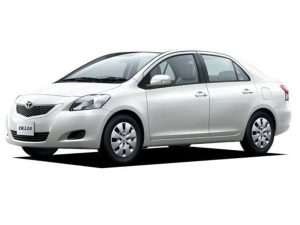
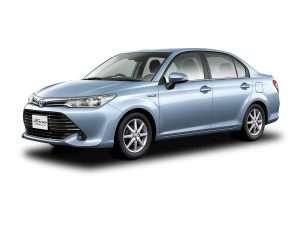
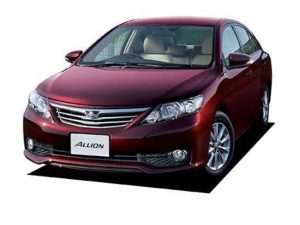
The Belta is one of those cars that looks more grown-up than its dimensions suggest.

It is only around 4.3 metres long, but Toyota gave it the proportions of a proper sedan rather than simply stretching a small hatchback and attaching a boot. That was the entire point of the Belta: a compact car that could provide the dignity and practicality of a four-door sedan.

The design is conservative. There is no enormous grille, no fake aerodynamic sculpture and no attempt to convince you that a 1.3-litre commuter car is secretly a racing machine.

And that has aged rather well.

The original Belta has a clean bonnet, compact headlights, a relatively upright cabin and a separate boot. Later versions received a revised grille, wheel-cover design and exterior detailing. From 2008 onward, Toyota also made side-turn-signal mirrors standard across the lineup.

The car's narrow 1.69-metre width is particularly useful in Bangladesh. Dhaka's roads have a special talent for making ordinary cars feel enormous, so a vehicle that can slip through traffic without constant mirror anxiety is a welcome thing.

The downside is obvious: it is an old design now.

Park a Belta beside a modern Corolla and the age difference is impossible to hide. Lighting, grille treatment and body detailing all look distinctly from another era.

But there is also something reassuring about it.

The Belta does not try to impress you.

It simply looks like a sensible little sedan, and for Bangladesh's crowded urban roads, that is not a bad quality at all.

Interior

Simple, Spacious Enough And Built For Everyday Use

The Belta's cabin is a product of its time, and there is no point pretending otherwise.

The dashboard is straightforward, the controls are physical and the instrument cluster is conventional. Depending on grade, you could get better meters, automatic climate control, upgraded upholstery and additional convenience equipment.

The basic X is functional rather than luxurious.

But once you actually use the car, the simplicity begins to make sense.

There are no giant displays to distract you, no complicated touchscreen menus and no dozens of electronic settings. You turn the AC on, select the temperature and drive.

The cabin is reasonably spacious for a compact sedan. The wheelbase of 2,550 mm gives acceptable front and rear seating space, while the relatively upright body helps headroom.

The boot is one of the Belta's useful characteristics. Despite its compact exterior, the separate sedan trunk provides plenty of space for ordinary family luggage, shopping and weekend travel.

The seats are generally comfortable enough for daily driving, while higher grades provide better seat materials and additional comfort equipment.

However, the interior materials are unmistakably old. Hard plastics dominate, modern infotainment is absent from the original factory specification, and there is no modern digital cockpit.

For Bangladesh, though, simplicity can be a virtue.

An older car with straightforward controls is easier to maintain and easier to live with.

The biggest thing to remember is that many Belta cars now have aftermarket Android screens, cameras and other modifications. Those may make the dashboard look modern, but they do not change the underlying age or factory specification of the vehicle.

The Belta's interior is therefore best described as simple, practical and durable rather than luxurious.

Features

Useful Equipment, But Very Little Modern Technology

The Belta's equipment depends heavily on its year and grade.

The basic X is exactly what you would expect from an economical Japanese sedan of the mid-2000s: power steering, power windows, air-conditioning, central locking, basic audio equipment and essential safety equipment.

The G sits higher in the range and adds more comfort and convenience equipment.

Then came the X L Package, which was introduced on later versions with equipment such as an Optitron meter and automatic air-conditioning with pollen-removal mode.

The 2008 update also brought improvements to the seats, interior materials, rear door armrests, exterior grille and wheel covers. Toyota added side-turn-signal mirrors as standard equipment across the range.

Some versions also received heated comfort seats, particularly the higher grades.

But by modern standards, the technology list is rather short.

There is no factory Apple CarPlay, Android Auto, wireless charging, adaptive cruise control, blind-spot monitoring or lane-keeping assistance.

And that is perfectly normal because the Belta predates most of those systems.

In Bangladesh, you will often see Belta cars fitted with aftermarket touchscreen systems, reverse cameras, parking sensors, Bluetooth units and upgraded speakers. These are useful additions, but they are not original factory technology.

The most useful factory features are the boring ones: good air-conditioning, power windows, automatic transmission, compact dimensions and easy controls.

The Belta never tried to become a technology showcase.

It was built to be a cheap, dependable Japanese sedan.

On that particular mission, it was rather successful.

Safety

Adequate For Its Era, Basic By Today's Standards

The Belta's safety equipment must be judged according to when it was designed.

It provides the fundamentals: front airbags, ABS on applicable specifications, EBD, seatbelts, child locks and a stable front-engine, front-wheel-drive layout.

The braking system uses ventilated front discs and rear drums, which is perfectly normal for a compact sedan of this period.

But the Belta does not have the advanced electronic safety systems that have become common in newer Toyotas.

There is no Toyota Safety Sense.

There is no automatic emergency braking, forward collision warning, lane departure warning, adaptive cruise control or blind-spot monitoring.

There are also no side and curtain airbags in the basic specification.

That is the most important safety limitation of the car.

If you are moving from a much newer Toyota into a Belta, the difference will be obvious. Modern cars increasingly use cameras and sensors to help prevent crashes, while the Belta relies mainly on conventional passive safety and braking systems.

That does not make the Belta inherently unsuitable for normal driving.

It simply means you should drive it with the understanding that the car cannot provide the electronic assistance of a modern vehicle.

In Bangladesh, condition is equally important. Old tyres, worn brake components, damaged suspension bushes, poor headlights or an incorrectly repaired accident car can compromise real-world safety considerably.

Therefore, inspect the brakes, tyres, suspension, steering and airbags carefully.

The Belta's safety package was reasonable for its time.

Today, it is basic.

That is the honest answer.

Driving Experience

Light, Smooth And Made For Urban Life

The Belta is not fast.

There, I have saved you the trouble of discovering this yourself.

The 1.3-litre engine produces 87 PS and 116 Nm, which is enough to move the car around town without drama but not enough to turn a straight road into a drag strip.

And frankly, that suits the Belta.

The CVT automatic transmission is smooth and relaxed. In Dhaka traffic, where the average journey consists of acceleration, braking, stopping, waiting and wondering why the traffic has stopped again, the CVT makes life easier.

The steering is light, the body is compact and the turning radius is only around 4.6 metres on the 1.3 X, making U-turns and parking relatively easy.

Ride comfort is another strong point.

The suspension is tuned more toward comfort than sport, and the light body helps it absorb ordinary road imperfections reasonably well.

However, the low ground clearance is the familiar Bangladesh problem. Tall speed breakers, broken roads and deep potholes require patience.

On highways, the Belta is comfortable at normal cruising speeds. The engine becomes noticeably busier during hard acceleration, especially with passengers and luggage, but relaxed cruising is perfectly acceptable.

Fuel economy is one of its strongest arguments. A healthy 1.3L car can deliver around 10–12 km/L in congested city conditions and approximately 15–18 km/L on open roads.

That makes the Belta particularly attractive as an inexpensive daily commuter.

It is not exciting.

It is not powerful.

But it is easy.

And sometimes, especially in Dhaka traffic, easy is exactly what you want.
EXPLORE THE RANGE

Variants

X, X L Package And G

The Belta's Japanese grade structure is relatively straightforward compared with many Toyota models.

The principal grades were X and G, with the X L Package introduced later as a better-equipped version of the X. Toyota also offered business-oriented packages based on the X.

The X was the straightforward, affordable version. It could be paired with the 1.0-litre or 1.3-litre engines depending on year and drivetrain.

The X L Package added useful comfort equipment, including the Optitron meter and pollen-removal automatic air-conditioning on applicable later versions.

The G was the higher-grade 1.3-litre version, with better equipment and, depending on model year, larger 15-inch wheels and additional comfort features.

There were also 4WD versions, although these are much less relevant to the typical Bangladesh market than the 2WD cars.

For Bangladesh, the 1.3L FWD CVT is the most sensible Belta configuration to understand because it combines adequate performance, reasonable fuel economy and easy urban driving.

The 1.0L version is more economical but noticeably less powerful.

The 4WD versions are rarer and have higher weight and different transmission characteristics.

The most important thing with a Belta today, however, is not the grade badge.

These cars are now old.

A beautifully maintained X can be a much better car than a neglected G.

Check the auction history, chassis, mileage, accident repairs, CVT, suspension, AC and electrical systems.

The Belta's appeal is simple: it gives you a small, comfortable Toyota sedan for relatively little money.

Just remember that you are buying a 2005–2012-era car, not a modern Toyota with a vintage badge.

That distinction is the difference between a sensible purchase and a very expensive lesson.
TRENDING

Trending Toyota Cars

View All Toyota Cars
FAQ

Toyota Belta Questions & Answers

Toyota Belta price in Bangladesh is around 9-15 lakh for 2006–2012 models, prices depending heavily on condition, registration, mileage and used condition.

View All Toyota Belta FAQs
📍

Find Dealers Near You

Looking for Toyota Belta ? We will notify you when verified dealers become available.

💳

Calculate Your Car EMI

Estimate your monthly payment for Toyota Belta

৳ 30,00,000
৳5L ৳1Cr
৳ 5,00,000
৳0 ৳30L
9%
5% 18%
5 Years
1 Year 7 Years
Your Monthly EMI ৳ 64,250 Estimated payment per month
Principal Amount ৳ 30,00,000
Total Interest ৳ 7,68,000
Total Payment ৳ 37,68,000