5.0 Expert Rating

Toyota Aqua 1st Gen (2011 - 2021) Expert Review

Extensively tested and reviewed by Team CarHub

EXPERT VERDICT
"
Toyota Aqua 1st Gen is an exceptionally economical city hybrid with proven reliability, easy driving and strong Bangladesh practicality.
AT A GLANCE

Pros & Cons

✓
WHAT WE LIKE

Good Things

  • ✓
    Excellent fuel economy
  • ✓
    Proven hybrid system
  • ✓
    Easy city driving
  • ✓
    Compact parking size
−
WHAT COULD BE BETTER

Could Be Better

  • −
    Low ground clearance
  • −
    Small rear cabin
  • −
    Older safety technology
  • −
    Battery inspection essential
Toyota Aqua 1st Gen (2011 - 2021)
— 43 Reviews
৳ 10.00 Lakh - 23.00 Lakh

Exterior

A Compact Design That Still Looks Modern

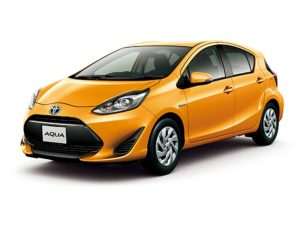
The first-generation Toyota Aqua was designed around efficiency rather than dramatic styling, and that remains obvious from the shape. The aerodynamic roofline, short overhangs and compact hatchback proportions give it a clean Japanese appearance.

The early Aqua measured around 3995 mm long, while later versions grew to approximately 4050 mm. The width remained around 1695 mm, keeping the car very manageable on crowded Bangladesh roads.

Why the Aqua Works So Well in Dhaka

The compact body is one of the Aqua's biggest practical advantages. In Dhaka traffic, where lanes can become suggestions rather than rules, a small hatchback is considerably easier to place on the road.

The 4.8-metre minimum turning radius also helps when negotiating narrow streets, tight U-turns and crowded parking areas.

The downside is the 140 mm ground clearance. That is perfectly acceptable for normal paved roads, but Bangladesh has an almost supernatural ability to produce speed breakers of questionable proportions.

You need to slow down for large breakers and deep potholes. The Aqua is a city hatchback, not a miniature Land Cruiser.

Exterior Design Verdict

Later facelift models look fresher and generally have more attractive lighting and exterior details. Special versions such as X-Urban and GR Sport add more visual character.

Overall, the Aqua's exterior is compact, aerodynamic and functional rather than flashy. It has aged reasonably well because the design was never trying too hard to be fashionable.

Interior

Simple Japanese Interior With Good Practicality

Inside, the Aqua follows the classic Toyota philosophy of putting practicality ahead of theatre. The dashboard is compact, controls are easy to understand and the digital instrumentation gives the cabin a distinctly hybrid-car character. The high-mounted digital display is one of the details that makes the Aqua feel different from a conventional small hatchback.

Front Seats and Daily Comfort

The front seats provide reasonable comfort for everyday commuting. Higher grades can offer better upholstery, steering-wheel trim and additional convenience equipment. There is plenty of useful storage for a small car, and the upright hatchback packaging makes the cabin feel more useful than its exterior dimensions initially suggest. However, this is still a compact hatchback. The rear seat is not especially generous, particularly when taller passengers sit behind tall front occupants.

Boot Space and Family Practicality

Toyota's clever hybrid packaging places the battery beneath the rear seating area, allowing approximately 305 litres of luggage space. That was an impressive figure for a compact hybrid when the Aqua launched. For groceries, shopping bags and normal family luggage, the boot is useful. Fold the rear seats and the car becomes considerably more practical. The interior's biggest weakness is therefore not usability but age. Newer hybrids provide better screens, connectivity, materials and cabin refinement.

Features

The Features That Matter in Bangladesh

The Aqua was never designed as a luxury car, but higher grades can be surprisingly well equipped. Power windows, automatic air-conditioning, keyless/start systems, digital instrumentation and Bluetooth-equipped infotainment are among the useful features found across the generation.

Higher grades add equipment such as leather-wrapped steering wheels, alloy wheels, better lighting, cruise control and improved infotainment.

Hybrid Technology Is the Real Feature

The most important technology is not the touchscreen. It is the hybrid system.

The 1.5L 1NZ-FXE engine works with an electric motor through Toyota's hybrid transmission, producing a combined system output of 100 PS. Toyota specifically developed the Aqua as a smaller, lighter version of the hybrid technology used in the Prius.

That means the Aqua can operate very smoothly at low speeds, recover energy during braking and switch between petrol and electric assistance automatically.

Where It Shows Its Age

This is where modern cars make the Aqua look old.

Apple CarPlay, Android Auto, wireless charging, large modern infotainment screens, 360-degree cameras and advanced connected services are not factory-standard features across the NHP10 generation.

Some Bangladesh-market cars will have aftermarket screens and cameras, but that equipment should not be confused with original Toyota factory specification.

The Aqua's technology is clever where it matters mechanically, but less impressive when you start playing with the infotainment screen.

Safety

Core Safety Equipment

The Aqua has a solid foundation of conventional safety equipment. ABS, EBD, Brake Assist, traction control and Toyota's VSC stability-control system are among the important systems used across the generation. Driver and passenger airbags are standard, while additional airbags depend on specification. ISOFIX child-seat mounting is also available, making the car practical for small families.

Toyota Safety Sense Changed the Later Cars

Later first-generation Aquas could be equipped with Toyota Safety Sense C, bringing forward-collision warning/pre-collision braking and lane-departure warning to selected versions. This is an important distinction because a 2012 Aqua should not be assumed to have the same safety technology as a later 2017–2021 example. Toyota's own catalogue shows that Toyota Safety Sense C was introduced on selected Aqua specifications rather than being universal across every NHP10.

Real-World Bangladesh Safety

The Aqua's compact size, predictable handling and stability-control systems are useful in urban traffic. However, its relatively low ride height and small-car construction mean you should not expect SUV-like clearance or the latest-generation crash-avoidance technology. For a used Aqua, the condition of airbags, brakes, tyres, suspension and structural components matters enormously. A clean chassis with functioning safety systems is far more important than simply choosing the newest-looking body kit.

Driving Experience

Smooth Rather Than Sporty

The Aqua's driving character can be summed up in one word: effortless.

The 1.5L hybrid powertrain combines a 74 PS petrol engine with a 45 kW electric motor, with the overall hybrid system producing 100 PS. The electric motor provides useful low-speed response, while the E-CVT keeps the power delivery smooth.

It is not a hot hatch. Toyota wasn't trying to build one.

Driving in Dhaka Traffic

This is where the Aqua really makes sense.

Stop-and-go traffic is less irritating because the hybrid system can provide electric assistance at low speeds, while regenerative braking recovers energy when you slow down.

The light steering, compact body and tight turning radius make the Aqua particularly easy to manoeuvre through crowded streets.

Air-conditioning use and heavy congestion will reduce the mileage, but a healthy hybrid system can still deliver impressive fuel economy compared with conventional petrol cars.

Highway Driving

On highways, the Aqua is stable enough for normal cruising, but overtaking requires some planning. The small 1.5L powertrain is tuned for economy rather than high-speed aggression.

The car feels happiest at sensible cruising speeds rather than being driven like a sports car.

The suspension provides acceptable comfort on reasonably paved roads, but the 140 mm ground clearance means broken roads, potholes and aggressive speed breakers require caution.

Long-Term Ownership

The biggest question with an older Aqua is not whether the hybrid system works well. It does.

The question is whether the individual car in front of you has been looked after properly.

A healthy hybrid battery, clean auction history, good suspension and properly functioning air-conditioning system can make the Aqua an extremely sensible used car.
EXPLORE THE RANGE

Variants

L — The Economy Choice

The L is the basic Aqua grade. It focuses on keeping the purchase price and equipment level lower while retaining the core 1.5L hybrid drivetrain.

It makes sense when fuel economy and low purchase cost matter more than additional convenience features.

S — The Balanced Choice

The S sits in the middle of the range and is one of the most common specifications encountered in the used market.

It offers a useful balance between equipment, price and everyday practicality. For many Bangladesh users, this is the sweet spot of the first-generation Aqua range.

G — The Higher-Spec Choice

The G is the more premium mainstream grade, adding additional comfort and convenience equipment depending on the production year.

Leather-wrapped steering wheels, better interior trim, additional equipment and cruise control are among the features associated with higher specifications.

Special Versions

The first-generation Aqua also received versions such as S Style Black, G Soft Leather Selection, X-Urban and GR Sport.

X-Urban gave the hatchback a more crossover-inspired appearance, while GR Sport focused on sportier styling and chassis character. These versions can command different prices in the Bangladesh used market.

Overall Opinion

The first-generation Toyota Aqua remains one of those cars that makes more sense after you drive it than when you look at its specification sheet.

It is not powerful, luxurious or packed with the latest technology. Instead, it is compact, economical, mechanically clever and easy to live with.

For Bangladesh, particularly Dhaka, that combination is remarkably useful.

The most important rule is simple: condition matters more than the badge on the grade sheet. A properly maintained Aqua with a healthy hybrid system can still be an exceptionally practical used hybrid.
TRENDING

Trending Toyota Cars

View All Toyota Cars
FAQ

Toyota Aqua 1st Gen (2011 - 2021) Questions & Answers

first-generation Toyota Aqua (2011-2021) models generally falls around ৳10–23 lakh in Bangladesh depending on model year, grade, mileage, registration status, hybrid battery condition etc,

View All Toyota Aqua 1st Gen (2011 - 2021) FAQs
📍

Find Dealers Near You

Looking for Toyota Aqua 1st Gen (2011 - 2021) ? We will notify you when verified dealers become available.

💳

Calculate Your Car EMI

Estimate your monthly payment for Toyota Aqua 1st Gen (2011 - 2021)

৳ 30,00,000
৳5L ৳1Cr
৳ 5,00,000
৳0 ৳30L
9%
5% 18%
5 Years
1 Year 7 Years
Your Monthly EMI ৳ 64,250 Estimated payment per month
Principal Amount ৳ 30,00,000
Total Interest ৳ 7,68,000
Total Payment ৳ 37,68,000