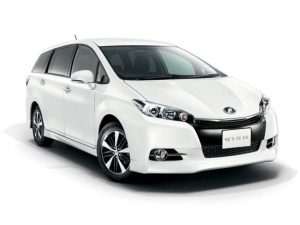
The Toyota Wish's safety equipment is respectable for its generation, but it should not be confused with a modern 2026 vehicle equipped with Toyota Safety Sense.
The later 1.8A includes driver and passenger airbags, side airbags, curtain airbags, ABS, Brake Assist, EBD, S-VSC stability control, three-point rear seat belts, front seatbelt pretensioners and force limiters, side-impact protection and a reinforced safety body structure. These are meaningful safety systems and give the Wish a solid basic safety foundation for an older Japanese MPV.
The S-VSC system is particularly useful because it helps maintain vehicle stability when traction or cornering conditions become difficult. That matters on wet Bangladesh roads during monsoon conditions.
However, this is where the Wish's age becomes obvious. There is no autonomous emergency braking, forward collision warning, lane departure warning, lane keeping assistance, adaptive cruise control, blind-spot monitoring or traffic-sign recognition. There is also no 360-degree camera in the original 1.8A specification.
Modern safety expectations have moved dramatically since the Wish was designed. That does not make the Wish unsafe by definition; it means its safety package should be understood in the context of its generation.
For Bangladesh driving, good tyres, functioning ABS/VSC systems, properly maintained brakes and a structurally sound body are just as important as the equipment list. A clean accident-free example with properly functioning safety systems is far more reassuring than a heavily repaired car wearing a shiny aftermarket screen.