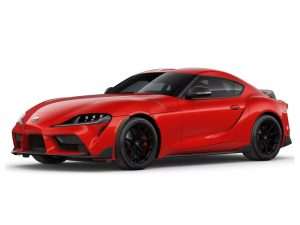
modern Japanese Supra range is built around SZ, SZ-R and RZ. The SZ uses the 197-PS 2.0L turbo engine, the SZ-R raises the same engine to 258 PS and 400 Nm, while the RZ uses the 3.0L inline-six with 387 PS and 500 Nm in the latest specification.
The SZ-R occupies the middle ground, but it is not simply a halfway point in engine output. Toyota gives it 18-inch Michelin Pilot Super Sport tyres, adaptive variable suspension, an active differential and a more performance-oriented chassis setup.
The 2022–2026 SZ-R is the DB26, and Toyota's catalogue identifies its production period as October 2022 through March 2026. It weighs 1460 kg and uses an 8-speed Sport Automatic.
For Bangladesh, that middle position makes the SZ-R particularly interesting. The SZ is lighter and cheaper, while the RZ is considerably more powerful. The SZ-R gives you a serious 5.2-second 0–100 km/h performance figure without moving to the larger six-cylinder engine.
The equipment level is also more convincing than the basic SZ, particularly with its adaptive suspension, active differential and larger performance tyres.
If you want the Supra experience rather than simply the fastest Supra possible, the SZ-R offers a very coherent package.
It still has the unavoidable Supra compromises: two seats, low clearance and limited luggage space. But those are part of the deal.
For Bangladesh, the SZ-R is ultimately a specialised sports coupe that works best when the road is good and the driver actually wants to enjoy it.