4.5 Expert Rating

Toyota Succeed 1st Gen (2002-2014) Expert Review

Extensively tested and reviewed by Team CarHub

EXPERT VERDICT
"
Toyota Succeed is an exceptionally practical, durable and economical wagon, especially useful for Bangladesh's roads, cargo needs and everyday city driving.
AT A GLANCE

Pros & Cons

✓
WHAT WE LIKE

Good Things

  • ✓
    Excellent cargo practicality
  • ✓
    Strong engine reliability
  • ✓
    Easy Bangladesh maintenance
  • ✓
    Good fuel economy
−
WHAT COULD BE BETTER

Could Be Better

  • −
    Basic interior quality
  • −
    Limited modern technology
  • −
    No modern ADAS
  • −
    Commercial-car driving feel
Toyota Succeed 1st Gen (2002-2014)
— 46 Reviews
৳ 5.00 Lakh - 11.00 Lakh

Exterior

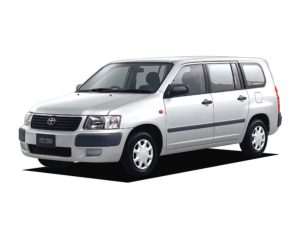
The Toyota Succeed is not trying to win a beauty contest, and frankly, it knows better. This is a car designed around practicality. Its tall, square body gives it the visual personality of a very determined refrigerator, but that shape makes enormous sense on Bangladesh roads.

At around 4.3 metres long, 1.695 metres wide and 2.55 metres between the axles, the Succeed is compact enough for Dhaka traffic while offering substantially more usable space than its dimensions initially suggest. Toyota deliberately used relatively upright side and rear windows to maximise interior and cargo space.

The simple front end, tall roof and large glass area give you excellent visibility. That is particularly useful when driving through crowded markets, narrow residential roads and chaotic parking areas. You can see where the car ends without requiring a camera, three sensors and an engineering degree.

The Succeed's body is also remarkably functional. The rear opening and flat cargo floor make loading boxes, luggage, shopping bags and equipment much easier than in an ordinary sedan.

The downside is obvious: this is not a premium-looking vehicle. Some Bangladesh examples have also spent years carrying commercial loads, so body condition deserves careful inspection. Look for repaired panels, rust, uneven gaps and signs of heavy commercial use.

But if your priority is practicality rather than glamour, the Succeed's square shape is one of its greatest strengths.

Interior

Succeed's cabin is essentially an argument against unnecessary decoration. It is simple, upright and designed to be useful. There are storage areas, straightforward controls and enough headroom to make getting in and out easy.

The driving position is particularly suitable for Bangladesh. The relatively high seating position gives you a good view over traffic, while the large windows make narrow roads and tight parking spaces easier to judge. The steering is light enough for everyday city use, and the dashboard is intentionally uncomplicated.

The five-seat passenger-oriented versions provide a more conventional family-car experience, while the commercial van versions prioritise cargo capacity. This distinction matters when looking at used Toyota Succeed cars because not every example has exactly the same rear-seat and cargo configuration.

The rear seats can fold to create a large, practical loading area. Toyota's design specifically focused on making the cargo floor flat and useful, with the commercial version offering substantial loading length.

Comfort is acceptable rather than luxurious. The seats are functional, the materials are basic and there is little attempt at premium ambience. On long drives, the upright commercial-oriented cabin can also feel less refined than a Toyota Premio, Allion or Corolla.

For Bangladesh, however, the simplicity has an advantage. There is less complicated electronics to fail, and basic controls are easy to understand.

If you want leather, ambient lighting and a giant infotainment screen, look elsewhere. If you want usable space and straightforward controls, the Succeed gets the job done.

Features

Succeed's feature philosophy is wonderfully old-fashioned: give you the equipment necessary to use the car and spend the rest of the budget making it practical.

Depending on year and grade, you can get power steering, power windows, manual air conditioning, central locking, adjustable steering, rear wiper, rear defogger, radio and useful cargo-area equipment. Some versions also offered keyless entry and upgraded exterior equipment.

The important thing is that the equipment varies between commercial UL/U grades and passenger-oriented wagon versions. Toyota offered different configurations rather than making every Succeed identical. The wagon versions were more focused on personal use and could receive equipment such as privacy glass, electric folding mirrors and upgraded trim.

There is no factory Apple CarPlay, Android Auto, wireless charging, adaptive cruise control or connected smartphone application. Obviously. This car was engineered before those things became normal.

For Bangladesh, aftermarket upgrades are easy. A modern touchscreen, reverse camera, Bluetooth system, USB charger and parking sensors can make an older Succeed considerably easier to live with.

The genuinely clever feature is not a gadget at all. It is the cargo layout. Toyota designed the rear area around carrying useful quantities of equipment, boxes and luggage rather than pretending a tiny boot is somehow luxurious.

This makes the Succeed particularly useful for families with large luggage requirements, small businesses, frequent shoppers and anyone who regularly carries bulky items.

It is not feature-rich by modern standards, but it is extremely practical.

Safety

Safety is considerably better than the Succeed's utilitarian appearance might suggest, particularly on documented higher-spec and later versions. Toyota equipped the first-generation model with important basic safety systems including dual front airbags, ABS with EBD and brake assist. Seat-belt pretensioners and force limiters were also available as standard on documented versions. That means the Succeed has a useful basic safety foundation for its age. ABS can help maintain steering control during hard braking, while EBD helps distribute braking force appropriately. Dual airbags provide another layer of protection in a frontal crash. But this is still a vehicle from the early 2000s. There is no electronic stability control, blind-spot monitoring, lane-keeping assistance, automatic emergency braking, adaptive cruise control or modern collision-warning system. There are also no side or curtain airbags on the documented first-generation specifications. In Bangladesh, the condition of the individual car therefore matters enormously. Check whether the airbags are actually present and functional, whether the ABS warning light behaves correctly and whether the chassis has suffered major accident damage. The Succeed's large glass area and upright seating position also help in real-world urban driving because visibility is excellent. That is useful when dealing with pedestrians, rickshaws, CNGs, motorcycles and unpredictable traffic. So the safety story is straightforward: respectable basic protection for its generation, but nowhere near the active safety capability of a modern Toyota.

Driving Experience

Succeed drives exactly as you would expect from a practical Japanese commercial wagon: light, predictable and more interested in getting the job done than entertaining you.

The 1.5-litre 1NZ-FE engine is the star of the show. In 2WD form it produces around 109 hp and 141 Nm, which is enough for normal Bangladesh traffic without making the car feel excessively thirsty. Toyota's official specifications confirm the 1NZ-FE's 1496cc displacement and 109 PS output.

Acceleration is adequate rather than exciting. The Succeed is not a car you buy for 0–100 km/h bragging rights. You buy it because the engine is familiar, durable and relatively straightforward to maintain.

In Dhaka, the light steering, good visibility and compact width are genuinely useful. The Succeed can squeeze through traffic and narrow streets with less drama than a larger SUV. Its 4.8-metre turning circle also helps in tight spaces.

On highways, the car is comfortable enough for normal cruising, although wind noise and the commercial-oriented suspension remind you that this is not a luxury wagon. With a full load, acceleration becomes slower, but the strong low-to-mid-range usability of the 1NZ-FE remains useful.

For Bangladesh, expect roughly 9–11 km/L in city traffic and 13–16 km/L on highways from a healthy petrol example, depending heavily on traffic, AC use, fuel quality and vehicle condition.

It is not thrilling. It is dependable transportation. And sometimes that is precisely the point.
EXPLORE THE RANGE

Variants

The first-generation Toyota Succeed was offered in several configurations rather than one universal specification. The main distinction is between the commercial van versions and the more passenger-focused Succeed Wagon. The commercial Succeed used configurations such as U and UL, with the 1.5-litre 1NZ-FE being particularly relevant to the Bangladesh market. Toyota also offered 4WD versions and a 1.4-litre turbo-diesel engine in the Japanese market. The passenger wagon range included grades such as TX, with versions designed around family and personal use rather than pure commercial loading. Toyota's wagon specifications show five seats, 4AT, FF or full-time 4WD and the same 1.5-litre 1NZ-FE family. For Bangladesh, the 1.5-litre petrol automatic is by far the configuration most relevant to everyday used-car shoppers. It combines reasonable fuel economy, familiar Toyota mechanics and good parts availability. The commercial van is particularly useful if cargo carrying is important. The passenger wagon is preferable if your priority is carrying people comfortably. The overall character remains the same: simple engineering, huge practicality and relatively easy ownership. It is less refined than a Premio or Allion, but it can be significantly more useful when you regularly carry luggage or equipment. If you find a well-maintained Succeed with a healthy 1NZ-FE engine, smooth transmission, working AC and straight chassis, it remains a very sensible Bangladesh-market used car.
TRENDING

Trending Toyota Cars

View All Toyota Cars
FAQ

Toyota Succeed 1st Gen (2002-2014) Questions & Answers

Toyota Succeed price in Bangladesh is currently around ৳5 lakh to ৳11 lakh for used 2002-2014 models, depending on model year, condition, registration, mileage and specification.

View All Toyota Succeed 1st Gen (2002-2014) FAQs
📍

Find Dealers Near You

Looking for Toyota Succeed 1st Gen (2002-2014) ? We will notify you when verified dealers become available.

💳

Calculate Your Car EMI

Estimate your monthly payment for Toyota Succeed 1st Gen (2002-2014)

৳ 30,00,000
৳5L ৳1Cr
৳ 5,00,000
৳0 ৳30L
9%
5% 18%
5 Years
1 Year 7 Years
Your Monthly EMI ৳ 64,250 Estimated payment per month
Principal Amount ৳ 30,00,000
Total Interest ৳ 7,68,000
Total Payment ৳ 37,68,000