5.0 Expert Rating

Toyota Succeed 2nd Gen (2014-2020) Expert Review

Extensively tested and reviewed by Team CarHub

EXPERT VERDICT
"
Toyota Succeed is an exceptionally practical Japanese wagon, combining reliable mechanics, useful cargo space, good economy
AT A GLANCE

Pros & Cons

✓
WHAT WE LIKE

Good Things

  • ✓
    Excellent cargo practicality
  • ✓
    Reliable 1.5L engine
  • ✓
    Good fuel economy
  • ✓
    Easy urban maneuverability
−
WHAT COULD BE BETTER

Could Be Better

  • −
    Basic commercial-style interior
  • −
    Limited modern technology
  • −
    Low ground clearance
  • −
    Modest acceleration
Toyota Succeed 2nd Gen (2014-2020)
— 48 Reviews
৳ 10.00 Lakh - 20.00 Lakh

Exterior

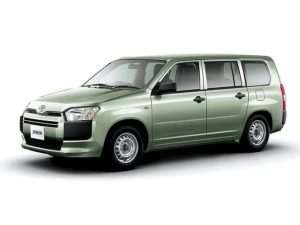
The second-generation Toyota Succeed is what happens when a manufacturer looks at a perfectly useful box and decides not to ruin it. Toyota redesigned the front end for the XP160 update, but the fundamental idea remained the same: tall roof, long body, enormous glass area and maximum usable space. At 4,245mm long, 1,690mm wide and 1,525mm tall, it remains compact enough for Bangladesh's crowded roads while providing an unusually useful amount of interior and cargo space. The 2,550mm wheelbase also gives the Succeed a stable footprint without making it cumbersome. The front styling is more modern than the original Succeed, with a cleaner grille, sharper headlights and a more contemporary bumper. But this is still fundamentally a commercial wagon. It does not pretend to be a luxury crossover. And that is precisely why it works in Bangladesh. The tall body provides excellent visibility, while the relatively narrow width makes navigating Dhaka's tight streets easier. Parking is also less intimidating because the square rear end and large windows make the car easy to judge. There are, however, plenty of examples that have spent their lives working rather than posing for photographs. Check the body carefully for dents, repaired panels, rust and signs of commercial abuse. The Succeed's styling will never be mistaken for a Premio, but its boxy shape is functional rather than fashionable. And when you need to carry things, functional wins.

Interior

Inside, the Succeed continues its policy of putting usefulness ahead of theatre. The dashboard is straightforward, the seating position is upright and the controls are simple enough that you can operate them without consulting a lawyer. The biggest advantage is visibility. The large windscreen and side windows give you an excellent view of the road, which is particularly useful in Bangladesh where traffic rarely behaves according to the rules printed in a driving manual. The cabin is spacious for its footprint, but the interior materials are basic. Hard plastics dominate, and the commercial origins are impossible to hide. This is not a car that tries to impress you with soft-touch surfaces. The rear seating configuration varies by grade and market, and the cargo area is the real star. The rear seats can fold, creating a large, practical loading area. Toyota's XP160 specifications give an interior cargo length of around 1,810mm, making it considerably more useful than a normal sedan boot. For family use, that means luggage, groceries, baby equipment and shopping can all disappear into the back without requiring a game of Tetris. Long-distance comfort is acceptable, but the cabin is not particularly luxurious or quiet. Road and tyre noise are noticeable, especially compared with passenger-oriented Toyota models. Still, the Succeed's interior has one major virtue: it works. It is easy to clean, easy to use and exceptionally practical.

Features

The Succeed's features became considerably better during the XP160 generation, although Toyota never abandoned its commercial-vehicle philosophy. Basic equipment includes power steering, air conditioning, power windows, central locking, rear wiper, rear defogger, remote keyless entry and radio/audio equipment, with higher grades receiving additional convenience features. Toyota's 2016 equipment list also shows power windows, remote wireless door locking, rear wiper, 2-speaker audio and various storage solutions. The major technological improvement came in 2016, when Toyota added Safety Sense C. This introduced pre-collision safety, lane departure alert and automatic high beam. That makes later XP160 models substantially more interesting from a safety perspective than the early cars. Then, in late 2018, Toyota added the 1.5L hybrid, bringing significantly better official fuel economy and automatic climate-control equipment on hybrid versions. The hybrid uses the 1NZ-FXE engine with an electric motor and CVT, producing an official WLTC combined figure of 22.6 km/L. Modern Bangladesh upgrades are also easy. A touchscreen head unit, reverse camera, Bluetooth and USB charging can transform the daily experience. What you will not find is a long list of luxury technology. There is no adaptive cruise control, factory Apple CarPlay, wireless charging or sophisticated connected-car ecosystem. But then, you don't buy a Succeed because you want your dashboard to look like a spaceship.

Safety

Safety is one of the areas where the XP160 generation made a meaningful improvement over its predecessor. The basic safety package includes dual airbags, ABS with EBD, brake assist, traction control and stability control on applicable specifications. Toyota's official equipment documentation confirms VSC/TRC, EBD-equipped ABS, brake assist, dual SRS airbags and hill-start assistance. The biggest change arrived in 2016, when Toyota Safety Sense C became standard. The package combines pre-collision safety, lane departure alert and automatic high beam. Toyota specifically described this as a collision-avoidance support package for the Succeed and Probox. That means a later Succeed can provide active safety assistance that simply did not exist on the original model. However, the system remains relatively basic by modern standards. There is no adaptive cruise control, blind-spot monitoring, traffic-sign recognition or lane-centering system. Side and curtain airbags are also absent from the documented standard equipment. In Bangladesh, the individual vehicle's condition remains extremely important. Check airbags, ABS/VSC warning lights, seat belts, tyres, brakes and chassis condition carefully. A particularly important point with reconditioned Japanese vehicles is verifying that safety equipment has not been removed, disabled or replaced after import. The XP160 is therefore considerably more safety-conscious than its utilitarian appearance suggests, particularly from 2016 onward, but it should still be viewed as an older commercial wagon rather than a modern high-tech family SUV.

Driving Experience

Succeed's driving experience can be summarised in three words: simple, light and useful.

The 1.5L 1NZ-FE produces approximately 109 hp, with torque figures around 136–141 Nm depending on the production specification. The engine is naturally aspirated and paired with Toyota's Super CVT-i automatic transmission on the later XP160 petrol range.

There is no dramatic surge of acceleration. Put your foot down and the CVT raises the engine speed while the car gathers speed in a smooth, predictable manner. With one or two occupants, performance is perfectly adequate. With five people and a boot full of luggage, you will discover that physics remains undefeated.

The Succeed is at its best in urban Bangladesh. The 4.9-metre turning radius, upright seating position and excellent visibility make it easy to negotiate crowded Dhaka streets.

The suspension is designed with practicality and load carrying in mind, so the ride can feel firmer than a passenger sedan. The upside is that the vehicle remains composed when carrying equipment or luggage.

On highways, it cruises comfortably at normal speeds, although overtaking requires some planning. Fuel economy is respectable, with around 9–11 km/L in city traffic and 13–16 km/L on highways being realistic targets for a healthy petrol car.

Then there is the hybrid, which changes the economic equation. Its official WLTC combined figure is 22.6 km/L, making it considerably more efficient on paper.

The Succeed is not exciting. It is competent. And competence is remarkably useful.
EXPLORE THE RANGE

Variants

XP160 Succeed range evolved considerably between 2014 and 2020. The petrol lineup included U, UL, UL-X and TX, with both 2WD and full-time 4WD versions available. The 1.5L petrol NCP160 uses the 1NZ-FE, while NCP165 versions provide 4WD.

The U is the straightforward workhorse. UL and UL-X add equipment and convenience features, while TX sits at the upper end of the range and is more attractive if you want additional equipment.

The major change came in August 2016, when Toyota Safety Sense C became standard across the updated Succeed lineup. This means a 2017 Succeed can be substantially more safety-equipped than an early 2014/2015 example.

Then came the hybrid in December 2018. The hybrid versions used the NHP160V chassis and were offered as U, UL, UL-X and TX. They use a 1.5L hybrid powertrain, CVT and front-wheel drive, with a 42-litre fuel tank and 22.6 km/L official WLTC combined economy.

For Bangladesh, the 1.5L petrol 2WD remains the simplest configuration to understand and maintain. The hybrid is particularly interesting if fuel economy is the priority and the hybrid battery and system are thoroughly inspected.

The Succeed nameplate ended in May 2020, after which Toyota consolidated the Japanese commercial wagon range under the Probox name.

Overall, the XP160 is the most modern and capable form of the Succeed: practical, economical, easy to manoeuvre and considerably safer in its later years.
TRENDING

Trending Toyota Cars

View All Toyota Cars
FAQ

Toyota Succeed 2nd Gen (2014-2020) Questions & Answers

Toyota Succeed 2nd gen (2014-2020) price in Bangladesh is currently around ৳10–20 lakh,

View All Toyota Succeed 2nd Gen (2014-2020) FAQs
📍

Find Dealers Near You

Looking for Toyota Succeed 2nd Gen (2014-2020) ? We will notify you when verified dealers become available.

💳

Calculate Your Car EMI

Estimate your monthly payment for Toyota Succeed 2nd Gen (2014-2020)

৳ 30,00,000
৳5L ৳1Cr
৳ 5,00,000
৳0 ৳30L
9%
5% 18%
5 Years
1 Year 7 Years
Your Monthly EMI ৳ 64,250 Estimated payment per month
Principal Amount ৳ 30,00,000
Total Interest ৳ 7,68,000
Total Payment ৳ 37,68,000