3.5 Expert Rating

Toyota RAV4 3rd Gen (2005-2012) Expert Review

Extensively tested and reviewed by Team CarHub

EXPERT VERDICT
"
Toyota RAV4 2005–2012 is a capable, spacious and reliable SUV with strong performance, useful 4WD and practical Bangladesh road manners.
AT A GLANCE

Pros & Cons

✓
WHAT WE LIKE

Good Things

  • ✓
    Strong 2.4L performance
  • ✓
    Genuine full-time 4WD
  • ✓
    Excellent road visibility
  • ✓
    Good ground clearance
−
WHAT COULD BE BETTER

Could Be Better

  • −
    High fuel consumption
  • −
    Aging interior technology
  • −
    CVT maintenance can be costly
  • −
    Large body in Dhaka
Toyota RAV4 3rd Gen (2005-2012)
— 37 Reviews
৳ 10.00 Lakh - 20.00 Lakh

Exterior

The third-generation Toyota RAV4 is where the little adventurous crossover of the early 2000s grew up and became a proper family SUV. It is noticeably larger than the previous generation, with a broader stance, more substantial cabin and a more mature road presence.

Depending on the production year, the body is around 4.335–4.365 metres long, 1.815 metres wide and 1.685 metres tall. Those dimensions are still manageable in Bangladesh, although you immediately notice the extra width when squeezing through Dhaka's tighter streets.

The styling is clean rather than flamboyant. Early cars have a softer, rounded appearance, while later facelift versions receive sharper front-end treatment and more modern-looking lighting. Higher grades such as Sport add visual aggression without turning the RAV4 into something ridiculous.

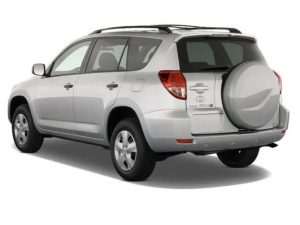
The high roof and large windows are particularly useful in Bangladesh. Visibility is excellent, and the elevated driving position gives the driver a clear view of traffic. The approximately 190mm ground clearance is also a welcome advantage over low sedans when dealing with speed breakers, potholes and broken roads.

Roof rails, alloy wheels, fog lamps and spoilers vary by grade, but the basic silhouette remains recognisable across the generation.

There is also a full-size spare wheel arrangement on many versions, reinforcing the old-school SUV character.

It will never be mistaken for a modern luxury SUV, but that is not really the point. The RAV4 looks honest, practical and sufficiently rugged for Bangladesh without becoming enormous.

Interior

Step inside and the RAV4 immediately makes its purpose clear. This is a five-seat family SUV, not a sports car with an unnecessarily tall roof. The driving position is excellent. You sit high enough to see over much of the surrounding traffic, and the large windows provide excellent visibility. In Dhaka, where motorcycles, rickshaws and CNGs appear from every imaginable direction, that is more useful than another 50 horsepower. The cabin is reasonably spacious for five people, with a practical rear bench and folding rear seats that expand cargo-carrying ability. The approximately 410-litre luggage area is useful for family shopping, luggage and everyday equipment. Higher grades can bring automatic climate control, cruise control, leather-wrapped steering and additional convenience equipment. But this remains an early-2000s interior, so the materials are functional rather than luxurious. The dashboard layout is straightforward and easy to understand. There is no giant tablet dominating the centre console, because giant tablets were not yet a thing when this RAV4 was designed. The downside is obvious in 2026. Factory infotainment feels prehistoric compared with a modern Toyota. Bluetooth, USB, smartphone integration and reverse cameras depend heavily on grade or aftermarket upgrades. Fortunately, the cabin responds well to modernisation. A good touchscreen, reverse camera, parking sensors and USB charging can make the RAV4 dramatically more convenient. The seats are comfortable enough for long trips, and the upright driving position reduces fatigue. It is not luxurious, but it is practical—and practical ages rather better than fashion.

Features

The RAV4 was fairly sophisticated for its era, especially in higher Japanese grades. Depending on year and trim, buyers could get automatic climate control, cruise control, smart entry, navigation, alloy wheels, fog lamps, roof rails, leather steering, power windows and upgraded audio equipment. Toyota's later Japanese X and G specifications show how equipment varied between grades, with higher versions receiving automatic climate control, cruise control and additional convenience equipment. The most useful feature, however, is not electronic. It is the combination of a flexible five-seat cabin, large cargo area and SUV ground clearance. The full-time 4WD system is another major attraction. It gives the RAV4 a level of traction that is useful on wet roads, muddy surfaces and rough rural routes. It is not a Land Cruiser and should not be treated as one, but it is considerably more capable than a basic front-wheel-drive family car. Technology is where the age becomes obvious. Apple CarPlay, Android Auto, wireless charging, modern connected services and advanced parking systems were simply not part of the original vehicle. For Bangladesh owners, aftermarket upgrades are therefore common and sensible. A quality touchscreen with smartphone connectivity, reverse camera, parking sensors and USB charging covers most of the missing modern conveniences. The equipment list also varies substantially between imported cars, so buyers should inspect the actual vehicle rather than relying solely on the grade name. The RAV4's strongest feature remains the mechanical package: a strong 2.4L engine, CVT and full-time 4WD in the configuration most relevant to Bangladesh buyers.

Safety

The third-generation RAV4 brought a respectable safety package for its period. Depending on market and specification, equipment included dual front airbags, ABS, Brake Assist, EBD, traction control, stability control, side airbags and curtain airbags. Toyota's Japanese specifications confirm ABS, Brake Assist and EBD, while the broader RAV4 range offered additional electronic stability and traction systems depending on configuration. This was a considerable step beyond the safety technology found in many older Japanese vehicles, but it is important not to confuse period-appropriate safety with modern safety. There is no Toyota Safety Sense package here. No automatic emergency braking. No adaptive cruise control. No lane-keeping assistance. No traffic-sign recognition. No modern blind-spot system. The physical structure nevertheless provides a useful safety foundation, while the elevated driving position and excellent outward visibility help in real-world Bangladesh traffic. The braking system is another strong point. Later versions use ventilated front discs and rear discs, supported by ABS, Brake Assist and EBD. For a used RAV4 today, condition is absolutely crucial. Tyres, brake discs, pads, suspension, steering components, airbags and seatbelts should all be inspected. A 2005 car is now more than 20 years old, and even excellent original engineering cannot compensate for decades of neglect. The safety package was good for its time. It is simply not comparable with the accident-prevention technology of a 2026 RAV4.

Driving Experience

The 2.4L RAV4 is one of those cars that makes sense almost immediately. The 2AZ-FE produces approximately 170 PS and 224 Nm, which is plenty for a compact SUV of this generation. Press the accelerator and it moves with considerably more authority than a 1.5L Japanese sedan. Overtaking on Bangladesh highways is straightforward, and the engine does not feel stressed when the vehicle is loaded with passengers. The CVT is smoother than the four-speed automatic found in the previous generation, although some older units can develop shuddering or transmission-related problems if maintenance has been neglected. A proper test drive is therefore essential. The full-time 4WD system is particularly useful in Bangladesh. On wet roads, broken rural routes and loose surfaces, the RAV4 feels more secure than a conventional FWD sedan. Around Dhaka, the high seating position and excellent visibility make the SUV surprisingly easy to operate. The problem is fuel consumption. A 2.4L petrol engine, CVT and permanent 4WD will never deliver Axio-like economy. 7–9 km/L in heavy city traffic is a realistic expectation. Ride quality is generally comfortable, and the suspension deals reasonably well with imperfect roads. But a worn-out suspension can make an otherwise excellent RAV4 feel dreadful, which is why condition matters enormously. On long highway journeys, the RAV4 is one of the more comfortable choices in this price bracket. It feels stable, has enough power for overtaking and provides a commanding driving position. It is not economical transport. It is a practical SUV with useful performance—and that distinction matters.
EXPLORE THE RANGE

Variants

The third-generation RAV4 was offered in several grades and drivetrain combinations, with equipment changing significantly over its production period. Japanese versions included X, G, Sport and Style-related grades, while other international markets used different naming structures. The most important distinction for Bangladesh buyers is the engine and drivetrain. The 2.4L 2AZ-FE is the most relevant configuration, producing around 170 PS and 224 Nm in later Japanese models. Toyota's official specifications show the 2.4L paired with full-time 4WD and Super CVT-i in representative later versions. The X grade is the straightforward option for buyers who want the RAV4's core mechanical package without paying for every luxury feature. G grades add comfort equipment such as automatic climate control and cruise control. Sport versions add more aggressive styling and equipment. The generation also changed subtly through its production life. Later cars received updated styling and equipment, making 2009–2012 examples particularly interesting when the condition and price are right. For Bangladesh, however, the grade should never be the first thing you inspect. Engine condition, CVT behaviour, 4WD operation, suspension, accident history and maintenance records matter far more. The RAV4's fundamental formula remains compelling: a strong 2.4L petrol engine, smooth CVT, useful ground clearance, five-seat practicality and full-time 4WD. At roughly ৳11–20 lakh, it occupies an interesting part of Bangladesh's used SUV market, but the right car is the one with the healthiest mechanical condition—not necessarily the one wearing the fanciest grade badge.
TRENDING

Trending Toyota Cars

View All Toyota Cars
FAQ

Toyota RAV4 3rd Gen (2005-2012) Questions & Answers

Toyota RAV4 2005–2012 price in Bangladesh generally ranges from around ৳10 lakh to ৳20 lakh, depending on model year, engine, registration, mileage and condition.

View All Toyota RAV4 3rd Gen (2005-2012) FAQs
📍

Find Dealers Near You

Looking for Toyota RAV4 3rd Gen (2005-2012) ? We will notify you when verified dealers become available.

💳

Calculate Your Car EMI

Estimate your monthly payment for Toyota RAV4 3rd Gen (2005-2012)

৳ 30,00,000
৳5L ৳1Cr
৳ 5,00,000
৳0 ৳30L
9%
5% 18%
5 Years
1 Year 7 Years
Your Monthly EMI ৳ 64,250 Estimated payment per month
Principal Amount ৳ 30,00,000
Total Interest ৳ 7,68,000
Total Payment ৳ 37,68,000