4.0 Expert Rating

Toyota Raum 1.5 1st Gen (1997-2003) Expert Review

Extensively tested and reviewed by Team CarHub

EXPERT VERDICT
"
Toyota Raum is a clever, spacious and dependable compact MPV that remains practical for affordable family transportation in Bangladesh.
AT A GLANCE

Pros & Cons

✓
WHAT WE LIKE

Good Things

  • ✓
    Spacious practical cabin
  • ✓
    Reliable 1.5L engine
  • ✓
    Excellent passenger access
  • ✓
    Compact urban dimensions
−
WHAT COULD BE BETTER

Could Be Better

  • −
    Very old safety technology
  • −
    Modest engine performance
  • −
    Low ground clearance
  • −
    Outdated four-speed automatic
Toyota Raum 1.5 1st Gen (1997-2003)
— 43 Reviews
৳ 6.00 Lakh - 9.00 Lakh

Exterior

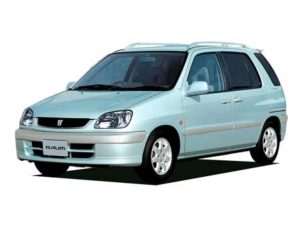
The first-generation Toyota Raum looks like a product of an era when Japanese car designers were beginning to realise that people occasionally wanted something more useful than a sedan. It is tall, narrow and unmistakably practical. At roughly four metres long, it occupies very little road space, yet the high roof creates a surprising amount of usable interior volume. In Bangladesh, that compact footprint is valuable because Dhaka parking spaces and narrow streets have never been particularly generous. The styling is simple rather than dramatic. There are no aggressive LED signatures, giant grilles or sculpted body lines. Instead, you get large windows, a tall roof and a short bonnet. It looks almost deliberately sensible. And then you notice the doors. The Raum's clever sliding-door and walk-through arrangement was one of its defining features. The passenger side was designed to create an unusually large opening, making it much easier for passengers to get into the rear seats. This is the sort of feature that sounds like marketing until you try loading children, elderly passengers or shopping bags beside another car. The 150mm ground clearance is less impressive. It is acceptable for ordinary paved roads but demands care around Bangladesh's larger speed breakers and potholes. Overall, the exterior has aged considerably, but the underlying design philosophy has not. It remains compact, easy to see out of and remarkably practical.

Interior

Inside, the Raum is essentially a small apartment disguised as a car. The first thing you notice is height. The roof is tall, the seating position is upright and the large glass area gives the cabin an airy feel. It does not have the width of a modern large MPV, but it uses its available space intelligently. The walk-through layout is particularly clever. Moving between the front and rear areas is easier than in a conventional sedan, and the sliding-door arrangement makes rear-seat access extremely convenient. For Bangladeshi families, this matters. Getting three people into a rear seat beside a crowded parking space can become a daily annoyance in a normal car. The Raum largely eliminates the problem. The materials are basic, as you would expect from a vehicle designed more than two decades ago. Hard plastics dominate the dashboard, the upholstery is generally fabric and modern conveniences such as a large touchscreen or USB charging were obviously not part of the original design brief. Yet the cabin remains useful. Cupholders, storage compartments, folding rear seats and the tall roof make the interior practical for everyday family use. The biggest weakness is technology. Compared with a modern Toyota, the Raum's infotainment and instrumentation feel prehistoric. But if your priorities are space, access and practicality rather than luxury, the old Raum still has a surprisingly strong argument.

Features

The Raum's features are interesting because its cleverest equipment has very little to do with electronics.

The star feature is the passenger-side opening and sliding-door system. Toyota designed the car around universal usability, making it easier for passengers of different ages and mobility levels to get inside.

Depending on grade, buyers could also get power windows, power steering, central locking, automatic air conditioning, front and rear armrests, keyless entry and other convenience equipment. Higher-spec versions were substantially better equipped than the basic cars.

But the first-generation Raum predates almost every modern technology buyers now take for granted.

There is no factory Apple CarPlay, no Android Auto, no modern Bluetooth ecosystem, no wireless charging, no touchscreen infotainment as standard and no connected-car application. Modern used examples in Bangladesh often have aftermarket DVD players, Android screens and reverse cameras, but those are modifications rather than original Toyota equipment.

This is actually an advantage in one respect: the mechanical layout is straightforward.

The 1.5L 5E-FE engine is simple, the four-speed automatic is conventional and the cabin does not contain an enormous collection of modern electronic systems waiting to age.

The features that matter most today are therefore the same features Toyota originally emphasised: easy access, spacious seating, flexible interior space, power-operated equipment and practical family usability.

The Raum was never a technology showcase. It was a clever transportation device.

Safety

Safety is where the Raum's age becomes impossible to hide.

For its era, Toyota provided a sensible safety foundation. Depending on model year and grade, the car could have dual front airbags, ABS, reinforced body construction and seat-belt protection systems. The body itself was designed with crash-energy management and pedestrian-impact considerations.

But modern safety expectations have moved dramatically.

There is no autonomous emergency braking, adaptive cruise control, lane-keeping assistance, blind-spot monitoring, rear cross-traffic alert or modern Toyota Safety Sense package. There is also no electronic stability-control system comparable to what is standard on many newer cars.

The braking hardware is conventional, with ventilated discs at the front and drums at the rear. For a vehicle of roughly 1.1 tonnes, this is adequate when maintained properly.

In Bangladesh, the condition of the individual car therefore becomes extremely important. A twenty-year-old vehicle with worn tyres, tired suspension, poor brakes or questionable accident repairs is a completely different safety proposition from a carefully maintained one.

The Raum does have one underrated safety advantage: visibility. Its upright seating position and large windows make it easy to see surrounding traffic.

Still, buyers should understand exactly what they are purchasing. The Raum offers period-appropriate passive safety and visibility, not modern active driver assistance.

That is acceptable for an old used car, provided expectations are realistic and the individual vehicle is thoroughly inspected.

Driving Experience

The Raum drives exactly as its shape suggests: calmly, predictably and without any interest whatsoever in becoming a sports car. The 1.5L 5E-FE produces 91 PS and 130 Nm in the 2002–2003 FF specification. Those numbers are hardly terrifying, but they are enough for normal city transportation. The four-speed automatic is old-fashioned but straightforward. In Dhaka, the Raum's compact dimensions are a genuine advantage. It is easy to position in traffic, easy to park and easy to manoeuvre through narrow streets. The tall driving position provides good visibility, and the steering is light enough for constant low-speed work. Acceleration is merely adequate. With one or two occupants, it feels perfectly usable. Fill all five seats and add luggage, however, and the engine begins to sound rather more enthusiastic than the acceleration suggests. Highway driving is comfortable at sensible speeds, but overtaking needs planning. This is a family MPV, not a highway missile. The suspension provides reasonable comfort on ordinary roads, although the age of most surviving examples means condition varies enormously. Worn shocks, bushes and springs can transform a comfortable Raum into a rather unpleasant one. Fuel economy in Bangladesh is realistically around 8–11 km/L in city traffic and 13–16 km/L on highways, depending heavily on maintenance and traffic. The Raum's driving philosophy is therefore simple: get five people somewhere comfortably and economically. And, for that job, it remains surprisingly competent.
EXPLORE THE RANGE

Variants

The first-generation Toyota Raum was offered in several versions throughout its production period, including standard Raum, C Package, G Package, Walkthrough variants and various special editions.

The basic cars concentrated on essential equipment and represented the simpler end of the lineup. C Package versions added convenience and exterior equipment, while G Package cars were positioned higher with additional comfort features. Special editions such as Elegant Edition and Wise Selection added equipment or styling changes for particular model years.

There were also both FF/FWD and full-time 4WD versions. The 4WD models were heavier and produced slightly less power, while the FF versions were lighter and more economical.

For the 2002–2003 period, the FF model used the 1.5L 5E-FE with 91 PS and 130 Nm, while the later second-generation Raum introduced in May 2003 moved to the newer 1NZ-FE engine and a completely updated platform.

That distinction matters when buying in Bangladesh. A “2003 Raum” can refer to either the final first-generation car or the new second-generation car depending on production date.

For the 1997–2003 first-generation range, buyers should therefore pay attention to the actual chassis, engine and production specification rather than relying only on the registration year.

Overall, the first-generation Raum's greatest strengths remain its practical cabin, easy passenger access, reliable Toyota engine and compact dimensions. Its weaknesses are equally clear: old safety technology, modest performance and considerable age.

At today's Bangladesh prices, condition is everything.
TRENDING

Trending Toyota Cars

View All Toyota Cars
POPULAR

Popular MPVs

View All MPVs
FAQ

Toyota Raum 1.5 1st Gen (1997-2003) Questions & Answers

Toyota Raum 1997–2003 price in Bangladesh is approximately ৳6–9 lakh. Prices vary according to model year, registration year, mileage, engine and transmission condition, body condition and maintenance history.

View All Toyota Raum 1.5 1st Gen (1997-2003) FAQs
📍

Find Dealers Near You

Looking for Toyota Raum 1.5 1st Gen (1997-2003) ? We will notify you when verified dealers become available.

💳

Calculate Your Car EMI

Estimate your monthly payment for Toyota Raum 1.5 1st Gen (1997-2003)

৳ 30,00,000
৳5L ৳1Cr
৳ 5,00,000
৳0 ৳30L
9%
5% 18%
5 Years
1 Year 7 Years
Your Monthly EMI ৳ 64,250 Estimated payment per month
Principal Amount ৳ 30,00,000
Total Interest ৳ 7,68,000
Total Payment ৳ 37,68,000