Exterior
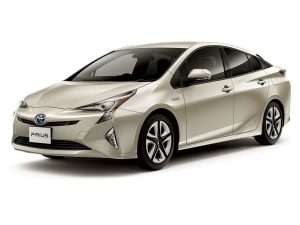
The fourth-generation Toyota Prius is one of those cars that refuses to look ordinary. Toyota pushed the familiar Prius aerodynamic shape much further, creating a sharply tapered nose, low roofline, distinctive triangular profile and dramatic rear lighting arrangement.
The result was controversial when the car launched, but there is a very good engineering reason behind almost every line. The shape was designed to reduce aerodynamic drag and improve efficiency, which is exactly what a Prius is supposed to do.
The 2015 launch version measured 4,540 mm long, 1,760 mm wide and 1,470 mm high, with a 2,700 mm wheelbase. Later facelifted versions stretched to 4,575 mm while retaining the same 2,700 mm wheelbase.
Depending on grade, the exterior can include 15-inch or 17-inch alloy wheels, LED lighting, fog lamps, automatic headlights, rain-sensing wipers, rear spoiler and different mirror treatments. Touring versions look noticeably sportier because of their larger wheels and more aggressive trim.
In Bangladesh, however, the design has one practical drawback that matters more than appearance: ground clearance. At around 130 mm, the Prius sits low. Large Dhaka speed breakers, potholes, basement ramps and badly repaired roads require deliberate driving.
On good roads, the low stance contributes to stability. On terrible roads, it means you must know where the underside is.
Interior
The fourth-generation Prius cabin is considerably more modern than the third-generation car, but Toyota still refused to make it conventional. The central instrument layout remains, while the dashboard uses a minimalist, futuristic design with a floating-console appearance and unusual electronic controls.
The 2,700 mm wheelbase provides respectable passenger space, while the liftback body gives the Prius a practical advantage over many conventional sedans. The rear seats fold down, allowing the cargo area to handle luggage, shopping and larger everyday loads.
Toyota improved the seating position and cabin packaging compared with the previous generation, although the dramatic roofline still means rear headroom is not a major strength. Taller passengers may notice the low roof when entering or sitting in the rear.
Equipment varies enormously by grade. Basic versions focus on efficiency and practicality, while higher grades can add leather upholstery, power seats, advanced navigation, premium audio, Smart Entry, heated seats and additional safety technology.
The cabin's biggest weakness today is not design but complexity between specifications. A 2015 base car and a 2021 Safety Plus-equipped car can feel like completely different products.
For a used Prius in Bangladesh, inspect the interior carefully. Worn seats, steering wheel surfaces, switchgear and pedal rubbers should be compared with the stated mileage.
Features
This generation is where the Prius became a genuinely sophisticated technology package rather than simply a fuel-saving car.
The fourth-generation hybrid system is more efficient than the previous generation, while the TNGA-based platform improved ride, handling and structural rigidity. Toyota also offered different battery technologies depending on specification, including nickel-metal hydride and lithium-ion batteries. Toyota described the new powertrain as retaining the 1.8-litre 2ZR-FXE Atkinson-cycle engine while substantially improving efficiency and thermal efficiency.
Depending on year and grade, features can include automatic climate control, Smart Entry, push-button start, cruise control, LED lighting, navigation, touchscreen infotainment, Bluetooth, parking sensors, parking assistance, heated seats and wireless charging.
The biggest technological leap is Toyota Safety Sense. Equipped cars can have Pre-Collision Safety, Lane Departure Alert, steering assistance, Automatic High Beam and Dynamic Radar Cruise Control. Later Safety Plus II versions can also include blind-spot monitoring and panoramic-view monitoring.
There is still a caveat: equipment varies dramatically by grade and market. A Prius advertised simply as “2020” tells you very little about its actual equipment.
For CarHub specifications, the grade and actual equipment should therefore be separated rather than treating every fourth-generation Prius as identically equipped.
Safety
Safety is one of the major reasons the fourth-generation Prius remains attractive as a used car.
The basic platform includes ABS, Brake Assist, EBD, traction control, stability control and multiple airbags. Toyota then expanded the available driver-assistance technology through Toyota Safety Sense.
The exact package changed with the model year. Earlier versions could have Toyota Safety Sense P, including Pre-Collision Safety, pedestrian detection, Lane Departure Alert, steering assistance, Automatic High Beam and Dynamic Radar Cruise Control. Toyota's 2016 equipment documentation explicitly lists these systems.
Later Safety Plus and Safety Plus II versions added or bundled more equipment. Toyota's own vehicle listings show Safety Plus II cars with Pre-Collision Safety, Lane Departure Warning, cruise control, advanced lighting, Blind Spot Monitor, panoramic-view monitoring and parking-related assistance.
This makes a 2020–2022 well-equipped Prius considerably more sophisticated than an early fourth-generation car.
In Bangladesh, however, the safety assessment should not stop at the equipment list. Check whether airbags are intact, whether radar and camera systems work correctly, whether the windshield has been replaced properly and whether accident repairs have affected the sensors.
A Prius with impressive safety equipment but poorly repaired crash damage is not equivalent to a clean, properly maintained car.
Driving Experience
The Prius is built around a simple idea: make ordinary driving efficient without making it unpleasant. The fourth generation improves almost every part of that formula.
The 1.8-litre 2ZR-FXE Atkinson-cycle engine works with an electric motor through Toyota's power-split hybrid system and e-CVT. Combined system output is around 122 PS, which sounds modest, but the instant response of the electric motor makes the car feel perfectly adequate in city traffic.
There are no conventional gear changes. You press the accelerator and the hybrid system decides what to do. Sometimes the petrol engine starts; sometimes the electric motor handles the initial movement; often both work together. It is wonderfully smooth.
In Dhaka traffic, this is exactly what you want. Stop, creep, accelerate, brake, stop again—the Prius handles the cycle with very little drama. Regenerative braking also turns some of that repeated deceleration into stored electrical energy.
On highways, the car is stable and surprisingly refined. It is not fast, and heavy acceleration produces the familiar e-CVT rise in engine revs, but cruising is comfortable.
The TNGA platform also made the fourth-generation Prius more composed through corners than its reputation suggests. The low centre of gravity helps, although rough Bangladesh roads expose the firm side of the suspension, particularly with larger Touring wheels.
EXPLORE THE RANGE
Variants
The fourth-generation Prius had a wide range of grades and special packages. In the Japanese market, the main structure included E, S, A and A Premium, with Touring Selection versions for several grades. Toyota also offered E-Four AWD on selected versions.
The E was focused heavily on fuel efficiency and lower weight. The S was the mainstream specification and is one of the most familiar configurations in the used market. A versions added more driver-assistance and comfort equipment, while A Premium moved further toward leather, power-seat and premium-cabin equipment.
Touring Selection versions generally brought larger wheels and sportier exterior/interior equipment. Safety-focused packages such as S Safety Plus and later S Safety Plus II added important driver-assistance equipment. Toyota's 2021 S Safety Plus II specification confirms the 1.8-litre hybrid, five-seat, five-door configuration and 43-litre fuel tank.
There were also plug-in and related Prius models, but they should not be mixed into the standard Prius database entry.
For Bangladesh, the most important distinction is not simply which badge is on the rear. It is the combination of model year, grade, auction history, mileage, battery health, safety equipment and overall condition.
The fourth-generation Prius remains a particularly interesting used hybrid because it combines excellent efficiency with modern safety technology and genuinely useful everyday practicality. The trade-off is its low ground clearance and the need to inspect the hybrid system carefully before purchase.