4.0 Expert Rating

Toyota Premio (2007-2010) Expert Review

Extensively tested and reviewed by Team CarHub

EXPERT VERDICT
"
Toyota Premio 2007–2010 is a comfortable, refined and dependable Japanese sedan with strong practicality and excellent usability.
AT A GLANCE

Pros & Cons

✓
WHAT WE LIKE

Good Things

  • ✓
    Comfortable ride quality
  • ✓
    Spacious rear cabin
  • ✓
    Reliable 1.5L engine
  • ✓
    Excellent parts availability
−
WHAT COULD BE BETTER

Could Be Better

  • −
    Aging safety technology
  • −
    No modern connectivity
  • −
    Low sedan clearance
  • −
    Modest 1.5L performance
Toyota Premio (2007-2010)
— 36 Reviews
৳ 14.00 – 23.00 Lakh

Exterior

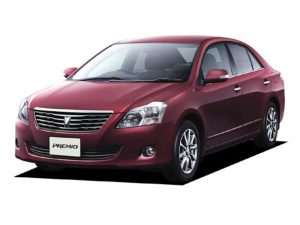
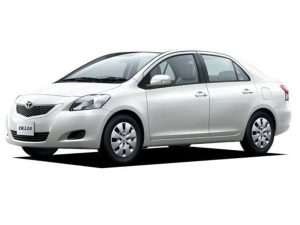
The second-generation Toyota Premio arrived with a very different mission from most modern sedans. It wasn't trying to look like a spaceship. It wanted to look expensive, comfortable and respectable. And, rather wonderfully, it succeeded. The 2007–2010 Premio has the classic three-box Japanese sedan shape: long bonnet, upright passenger compartment and a clean rear end. The design is conservative, but there is a reason these cars still look respectable on Bangladeshi roads nearly two decades later. The proportions are balanced rather than covered in fake vents and unnecessary creases. The car measures roughly 4.6 metres long and 1.695 metres wide, with a 2.7-metre wheelbase. That combination gives the Premio a surprisingly substantial road presence while retaining the narrow body dimensions that make it easier to manoeuvre through crowded urban streets. The facelifted cars, particularly G Superior and higher-specification versions commonly found in Bangladesh, look considerably more expensive. Chrome detailing, larger wheels, HID headlights and upgraded grille treatments give them the visual appearance of a much newer executive sedan. The drawback is obvious. Park a 2008 Premio next to a 2025 sedan and the Premio suddenly looks like it has been travelling through time in the wrong direction. But that is not necessarily bad. For Bangladesh, its understated design has aged gracefully. It doesn't scream for attention. It simply looks like a respectable Toyota sedan — which is precisely what many buyers want.

Interior

The Premio's interior is where the car really earns its name. It was designed around the idea that a family sedan should feel comfortable rather than exciting, and almost every decision reflects that philosophy. The dashboard is wide and conventional, with simple controls that can be understood without a university degree in touchscreen technology. Higher grades add wood-style trim, upgraded upholstery and better equipment, giving the cabin a considerably more premium atmosphere. But the real story is the rear seat. With its 2,700 mm wheelbase, the Premio provides generous passenger space for its relatively narrow exterior. Rear passengers get good legroom, a centre armrest and a comfortable seating position. For a Bangladeshi family travelling from Dhaka to Sylhet, Chattogram or Cox's Bazar, this matters much more than having a gigantic infotainment display. The cabin also benefits from Toyota's traditional visibility and ergonomics. The seating position is natural, the controls are straightforward and the boot is useful for family luggage. There is, however, a sizeable elephant in the room: age. The dashboard technology feels old. There is no factory-standard Android Auto, Apple CarPlay, wireless charging or modern digital instrument display. Many Bangladesh-market cars have aftermarket Android screens installed, but those should not be confused with original factory equipment. Still, spend three hours in the back seat and you understand why the Premio developed such a following.

Features

The Premio's feature list changes substantially according to grade. Toyota offered 1.5F, 1.8X and 2.0G models, then layered packages such as L Package, EX Package, Version C and Prime Selection over them.

The basic car already had the essentials: power steering, power windows, central locking, air conditioning, dual airbags, ABS, EBD and Brake Assist. Move upward through the range and you could find automatic climate control, better audio systems, navigation, HID headlights, alloy wheels, upgraded upholstery, wood-style interior trim and more premium equipment.

The L Package is particularly interesting because it was designed to make the Premio feel considerably more luxurious without turning it into a completely different vehicle. Prime Selection cars added equipment such as HID headlights, privacy glass and richer interior detailing.

And this is exactly why Bangladesh buyers need to be careful when comparing two Premios.

A seller may say “full option” and point at an Android screen, leather seats, reverse camera and LED bulbs. Those may have been installed locally years after the car left the factory. They are not necessarily factory specifications.

The technology is also unmistakably old. No wireless phone charging, no factory Android Auto, no Apple CarPlay and no modern connected-car ecosystem.

But the practical equipment remains good.

The Premio was designed to make daily life easier, and air conditioning, comfortable seats, power windows, rear-seat space and straightforward controls remain useful regardless of what year it is.

Safety

The Premio 2007–2010 has safety equipment that was respectable for its generation, but you need to judge it as a late-2000s Japanese sedan rather than a modern car. The standard package included driver and passenger airbags, ABS, EBD and Brake Assist. Front seat belts used pretensioners and force limiters, while three-point belts were provided for rear passengers. Toyota also incorporated a collision-protection body structure. Side airbags were available as an option on relevant specifications, meaning you should not assume that every Premio has them. The same principle applies to some higher-grade safety and equipment items. What the Premio does not have is arguably more important today. There is no modern adaptive cruise control, blind-spot monitoring, rear cross-traffic alert, lane-keeping assistance, traffic-sign recognition or autonomous emergency braking. These technologies simply weren't part of the car's original safety philosophy. In Bangladesh, there is another safety issue that matters enormously: condition. A Premio can have a Toyota badge, working ABS and two airbags and still be a poor purchase if its chassis has been badly repaired after a major crash. Imported and locally used vehicles can have very different histories. Therefore, inspect the airbag system, ABS warning light, seat belts, chassis rails, front and rear structural areas and signs of accident repair. The Premio's original safety engineering was solid for its era. But age doesn't care about reputation. Buy the individual car, not merely the Toyota badge.

Driving Experience

The Premio drives exactly how it looks: calm, smooth and slightly serious. The 1.5L 1NZ-FE is not an engine designed to make your hair stand up. In the later 2009–2010 specification it produces around 110 PS and 140 Nm, and the CVT keeps the engine operating smoothly rather than delivering dramatic gear changes. In Dhaka traffic, that is actually rather pleasant. The steering is light, the visibility is good and the CVT makes crawling through traffic remarkably easy. You don't have to constantly think about gear changes while navigating buses, rickshaws, motorcycles and the occasional vehicle apparently determined to occupy the same piece of road as you. The suspension is tuned for comfort. Ordinary broken roads and patched tarmac are absorbed reasonably well, and the long wheelbase helps the Premio remain composed on highways. The 1.5L's weakness becomes obvious when you load the car with five adults and luggage. It will move, certainly, but overtaking requires planning. The 1.8L is noticeably stronger, while the 2.0L is the engine for buyers who actually want some urgency. Fuel economy is reasonable rather than magical. In Bangladesh, around 9–10 km/L in city traffic, 14–16 km/L on highways and roughly 12 km/L combined is a sensible target for a healthy 1.5L. The Premio's real talent is long-distance comfort. It doesn't attack the road. It simply eats kilometres. And after several hours on the highway, that can be considerably more valuable.
EXPLORE THE RANGE

Variants

The 2007–2010 period sits inside the early years of the T260 generation, and Toyota offered several engine and equipment combinations. The 1.5F is the most straightforward choice. It uses the 1NZ-FE 1.5L engine and, in the relevant FWD configuration, a Super CVT-i. It is aimed at buyers who want comfortable transportation and reasonable fuel consumption. The 1.8X is the middle ground. The later 2ZR-FE version produces up to 136 PS and 175 Nm, giving the Premio substantially more breathing room when overtaking or carrying a full passenger load. Toyota also offered 4WD versions of the 1.8X. Then there is the 2.0G. This is the serious one. Later cars received Toyota's 3ZR-FAE Valvematic 2.0L engine, giving the Premio much stronger performance than the 1.5F. Equipment packages make the picture even more interesting. L Package cars add luxury-oriented equipment, while EX Package versions add features such as alloy wheels, privacy glass and HID lighting. Prime Selection versions were positioned as more premium special editions. Toyota's 2009–2010 catalogue confirms the 1.5F, 1.8X and 2.0G hierarchy and these package options. For Bangladesh, the 1.5L remains the rational everyday choice. The 1.8L is attractive if you regularly carry passengers or drive highways. The 2.0L makes sense if performance matters more than fuel economy. But with a 2007–2010 car, condition beats grade. A perfect 1.5F is preferable to a neglected 2.0G every single time.

FAQ

Toyota Premio (2007-2010) Questions & Answers

Current Bangladesh price for a Toyota Premio 2007–2010 is approximately Tk 14 lakh to Tk 23 lakh. Price varies according to grade, registration year, mileage, condition, fuel system and maintenance history.

View All Toyota Premio (2007-2010) FAQs
📍

Find Dealers Near You

Looking for Toyota Premio (2007-2010) ? We will notify you when verified dealers become available.

💳

Calculate Your Car EMI

Estimate your monthly payment for Toyota Premio (2007-2010)

৳ 30,00,000
৳5L ৳1Cr
৳ 5,00,000
৳0 ৳30L
9%
5% 18%
5 Years
1 Year 7 Years
Your Monthly EMI ৳ 64,250 Estimated payment per month
Principal Amount ৳ 30,00,000
Total Interest ৳ 7,68,000
Total Payment ৳ 37,68,000