3.5 Expert Rating

Toyota Premio (2010-2015) Expert Review

Extensively tested and reviewed by Team CarHub

EXPERT VERDICT
"
Toyota Premio 2010–2015 offers excellent comfort, reliability and space, making it a highly practical family sedan for Bangladesh.
AT A GLANCE

Pros & Cons

✓
WHAT WE LIKE

Good Things

  • ✓
    Comfortable ride quality
  • ✓
    Spacious rear cabin
  • ✓
    Reliable Toyota engines
  • ✓
    Strong parts availability
−
WHAT COULD BE BETTER

Could Be Better

  • −
    Aging safety technology
  • −
    Low sedan clearance
  • −
    No modern connectivity
  • −
    Modest 1.5L performance
Toyota Premio (2010-2015)
— 33 Reviews
৳ 18.00 Lakh - 30.00 Lakh

Exterior

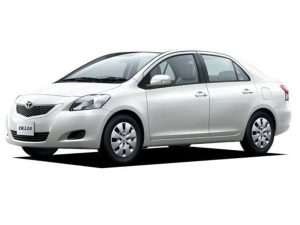
The 2010–2015 Toyota Premio is a fascinating piece of Japanese automotive design because it never tries particularly hard to impress you. It simply looks expensive. The T260's three-box sedan proportions are clean and formal, with a long bonnet, upright cabin and substantial rear end. At approximately 4.6 metres long and only 1.695 metres wide, it manages to look larger than it actually is while remaining reasonably easy to manoeuvre through Bangladesh's crowded streets. This is particularly useful in Dhaka. A car that is almost 4.6 metres long sounds enormous until you discover that its narrow body and excellent visibility make it considerably easier to place in traffic than many wider modern sedans. The 2010–2015 period also contains several visual updates. Higher grades received more attractive alloy wheels, chrome detailing, HID headlights, upgraded grilles and better exterior equipment. The later cars have a more polished appearance and generally look more expensive than their age suggests. There is a downside, of course. The basic shape is conservative. There are no dramatic shoulder lines, enormous grilles or angry LED signatures. Put it beside a modern sedan and the Premio looks like a gentleman who has arrived at a nightclub wearing a perfectly tailored suit while everyone else is wearing luminous sportswear. But that restraint is exactly why it works in Bangladesh. A clean Premio still looks respectable, mature and expensive. And unlike fashionable styling, that tends to age rather well.

Interior

The Premio's interior is built around an increasingly rare concept: making passengers comfortable without turning the dashboard into a television showroom. The cabin is spacious, quiet and deliberately conventional. The 2,700 mm wheelbase provides excellent rear-seat room, which is one of the car's strongest arguments for Bangladeshi families. Four adults can travel long distances comfortably, while the fifth passenger is not treated as an afterthought. The dashboard uses traditional Japanese ergonomics. Controls are logically positioned, visibility is good and the seating position is comfortable for long drives. Higher grades can add leather-wrapped steering wheels, wood-style trim, better upholstery, automatic climate control and power-adjustable seating. Toyota also paid attention to small details. Rear passengers receive a centre armrest and cupholders, while the folding rear-seat arrangement adds useful flexibility when carrying luggage. For a Dhaka family, this is more important than it sounds. The Premio is the sort of car in which a trip to Chattogram does not feel like a punishment. But the interior technology has aged. There is no giant modern digital cluster, no factory wireless charging, no native Android Auto and no factory Apple CarPlay. Many Bangladeshi cars have aftermarket Android head units installed, but those are modifications rather than original equipment. The materials also depend heavily on grade. A high-spec Premio feels genuinely premium; a basic 1.5F is much more ordinary. Still, the fundamental architecture remains excellent. The Premio's cabin doesn't entertain you. It accommodates you. And that is often more useful.

Features

The Premio's features are heavily grade-dependent, which is why two cars with the same model year can look completely different inside and out. The basic 1.5F already provides the essentials: power steering, power windows, air conditioning, central locking, comfortable seating and the fundamental Toyota safety equipment. Move into higher specifications and the equipment becomes considerably more interesting. Toyota offered packages including L Package and EX Package, while higher specifications could bring automatic climate control, navigation, better audio systems, HID headlights, alloy wheels, upgraded upholstery, leather/wood-style steering wheels, power seats and additional convenience equipment. Toyota's 2012 catalogue specifically lists the 1.5F EX Package as a higher-equipped version with discharge headlights and leather/wood-style steering. The 2012 update also brought improvements to comfort and equipment, including nanoe and super-UV-cut glass on selected higher grades. This is where the Premio makes sense as a used car. You can buy a relatively simple 1.5F and keep maintenance straightforward, or search for a better-equipped F L/EX Package or G/2.0 specification. The problem is the modernisation gap. There is no native Apple CarPlay, Android Auto, wireless charging or modern connected-car ecosystem. A Bangladeshi seller may advertise “all options” because the car has an Android screen, reverse camera and aftermarket leather, but those modifications should not be confused with Toyota factory equipment. The Premio's strongest features are therefore still the boring ones: excellent cabin space, comfortable seats, effective AC and straightforward controls. Sometimes boring is brilliant.

Safety

The 2010–2015 Premio represents the transitional period between traditional Japanese safety engineering and the sophisticated ADAS systems we see today.

The traditional safety package is solid. The car has ABS, EBD, Brake Assist, driver and passenger airbags and three-point rear seat belts. Higher specifications can add side and curtain airbags and other equipment.

Toyota also offered Vehicle Stability Control/traction-related systems on applicable later specifications, while parking assistance such as Intelligent Clearance Sonar was available on selected cars.

But the important thing is what it does not have.

There is no adaptive cruise control, blind-spot monitoring, rear cross-traffic alert, traffic-sign recognition, lane-keeping assist or autonomous emergency braking. Those technologies belong to a newer era of Toyota vehicles.

That doesn't make the Premio inherently unsafe. It simply means the driver remains much more responsible for avoiding hazards.

For Bangladesh, the biggest safety issue may actually be the history of the individual car.

A Premio can have excellent mechanical reliability and still be a poor purchase if it has suffered major structural accident damage. Imported cars may also have repairs that are difficult to identify without proper inspection.

Therefore, check the chassis carefully. Look at the front rails, rear structural areas, welds, panel gaps, paint thickness, airbags and seat-belt pretensioners. Make sure the ABS warning light behaves correctly and inspect the braking system.

The Premio's safety hardware was appropriate for its period.

But don't confuse Toyota reliability with modern crash-avoidance technology.

A 2014 Premio is still a 2014 car.

Physics has not been upgraded by the Toyota badge.

Driving Experience

The Premio's driving experience is best described as effortless rather than exciting. The 1.5L 1NZ-FE is a naturally aspirated four-cylinder producing roughly 109–110 PS and 136–140 Nm depending on model year. Toyota paired it with a Super CVT-i, and the combination is extremely smooth in normal urban driving. In Dhaka, that smoothness is useful. You spend much of your life crawling, stopping, accelerating for twenty metres and stopping again. The CVT doesn't complain. It simply keeps the car moving. The steering is light, the driving position is comfortable and the suspension is tuned more for absorbing broken roads than attacking corners. This is particularly noticeable on longer trips. At highway speeds the long wheelbase gives the Premio a settled, stable character. The 1.5L's weakness is power. With five adults, luggage and the AC running, the car is not exactly a missile. Overtaking on a two-lane highway requires planning. If performance matters, the 1.8L and 2.0L versions are much more convincing. Toyota's official figures show the 1.8L 2ZR-FAE at 144 PS/176 Nm in one 2010 configuration and the 2.0L 3ZR-FAE at 158 PS/196 Nm. For Bangladesh, a realistic 1.5L target is around 9–10 km/L in city traffic, 14–16 km/L highway and 12 km/L combined. So no, it isn't thrilling. But after three hours on a highway, you'll probably appreciate that more than thrills.
EXPLORE THE RANGE

Variants

The 2010–2015 period gives buyers a surprisingly broad Premio lineup. The main engine families are 1.5F, 1.8X and 2.0G. Toyota's 2012 catalogue confirms these three core grades, with L Package and EX Package versions adding equipment. The 1.5F is the sensible Bangladesh-market choice. It uses the 1NZ-FE 1.5L and CVT, giving reasonable fuel economy and smooth urban driving. For someone commuting around Dhaka and occasionally travelling outside the city, it is perfectly adequate. The 1.8X is the middle ground. Depending on year and specification, the 2ZR engine produces around 133–144 PS. The extra power is noticeable when overtaking and when the car is fully loaded. Toyota also offered 4WD versions of the 1.8X. The 2.0G is the performance-oriented version. The 3ZR-FAE produces up to 158 PS and 196 Nm in the earlier 2010 specification, while later versions were tuned differently. The equipment packages are equally important. L Package cars add comfort features, while EX Package and higher specifications bring more premium equipment. For Bangladesh, the 1.5F makes the most financial sense for everyday use, the 1.8X offers a useful performance upgrade, and the 2.0G is for buyers who value power more highly. But there is one final rule. Condition beats grade. A beautifully maintained 1.5F is a better purchase than a neglected 2.0G with a shiny dashboard.
TRENDING

Trending Toyota Cars

View All Toyota Cars
FAQ

Toyota Premio (2010-2015) Questions & Answers

Current Bangladesh asking prices are approximately Tk 18 lakh to Tk 30 lakh. Price depends heavily on registration year, grade, mileage, condition

View All Toyota Premio (2010-2015) FAQs
📍

Find Dealers Near You

Looking for Toyota Premio (2010-2015) ? We will notify you when verified dealers become available.

💳

Calculate Your Car EMI

Estimate your monthly payment for Toyota Premio (2010-2015)

৳ 30,00,000
৳5L ৳1Cr
৳ 5,00,000
৳0 ৳30L
9%
5% 18%
5 Years
1 Year 7 Years
Your Monthly EMI ৳ 64,250 Estimated payment per month
Principal Amount ৳ 30,00,000
Total Interest ৳ 7,68,000
Total Payment ৳ 37,68,000