4.0 Expert Rating

Toyota TownAce Noah (1996-2000) Expert Review

Extensively tested and reviewed by Team CarHub

EXPERT VERDICT
"
Toyota TownAce Noah is a spacious, durable and practical family MPV, but its age, fuel economy and outdated safety limit modern appeal.
AT A GLANCE

Pros & Cons

✓
WHAT WE LIKE

Good Things

  • ✓
    Spacious eight-seat cabin
  • ✓
    Reliable 2.0L engine
  • ✓
    Excellent family practicality
  • ✓
    Good Bangladesh parts availability
−
WHAT COULD BE BETTER

Could Be Better

  • −
    High age-related maintenance
  • −
    Mediocre fuel economy
  • −
    Outdated safety technology
  • −
    Slow acceleration
Toyota TownAce Noah (1996-2000)
— 39 Reviews
৳ 5.00 – 12.00 Lakh

Exterior

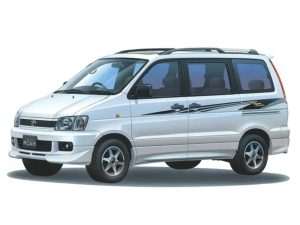
The TownAce Noah is not going to win any beauty contest, and frankly it never entered one. Toyota designed this generation around interior space, easy access and family practicality rather than aerodynamic drama. Launched in 1996, the TownAce Noah moved from the old cab-over layout to a semi-cab-over design with the engine moved forward. That created a flatter, more usable cabin while retaining the compact exterior footprint. Toyota specifically highlighted easier entry and exit, including lowered front and sliding-door steps. The standard body measures around 4.44 metres long, 1.695 metres wide and 1.935 metres tall, with a 2.715-metre wheelbase. Some versions, including Field Tourer variants, are longer and lower. The tall roof is actually one of its greatest Bangladesh advantages. It gives the vehicle a commanding driving position and makes getting in and out considerably easier than a conventional sedan. Higher grades could receive alloy wheels, roof/rear spoilers and even twin moonroofs. But don't let shiny wheels distract you from the important stuff. On a vehicle this old, check the chassis, floor, sliding doors, roof, suspension mounting points and signs of previous accident repair. In Bangladesh, a structurally honest Noah with faded paint is a much smarter proposition than a beautifully polished one hiding thirty years of abuse.

Interior

Inside, the TownAce Noah finally explains why people bought these things. It is essentially a small room with an engine attached. Toyota designed the cabin to accommodate numerous passengers while maintaining relatively compact exterior dimensions. The layout allows movement between the front and rear portions of the cabin, while the seating can be rearranged for passengers and luggage. Eight-seat configurations are common, giving the Noah a major advantage over similarly priced sedans. For Bangladeshi families, that means grandparents, children, luggage and the inevitable additional passenger can all theoretically come along. The upright seating position provides good visibility, and the tall roof makes entry considerably easier. Dual air-conditioning was available on higher specifications, which is particularly important in Bangladesh. But time has not been kind to the interior. Materials are functional rather than luxurious, insulation is nowhere near modern MPV standards and the original audio system belongs in a museum of buttons. The sensible approach is not to turn it into a rolling nightclub. Replace the old head unit with a modern touchscreen, add a reversing camera and refresh worn upholstery if necessary. Keep the mechanical parts original and spend money where passengers actually notice it: cooling, AC performance, suspension and seat condition.

Features

For a late-1990s MPV, the TownAce Noah was reasonably well equipped, particularly in higher grades. Power steering, power windows, central locking, tilt steering, dual air-conditioning, front fog lamps, rear wiper and UV-cut glass were available across relevant specifications. Higher versions could add navigation, alloy wheels, moonroofs and additional trim equipment. The Memorial Edition introduced factory navigation and CD equipment, demonstrating how the specification evolved toward the end of the decade. But this is still a 1990s Toyota. There is no Bluetooth, Apple CarPlay, Android Auto, wireless charging or giant infotainment display. There is also no sophisticated connected-car system waiting to tell you that your tyre has lost 2 psi. The practical features are what matter. Dual AC is extremely useful in Bangladesh. Power windows and central locking make daily use easier. The tall cabin and sliding doors are genuinely useful when carrying elderly passengers or children. Modern upgrades make sense, but keep them tasteful. A good touchscreen, reverse camera, parking sensors and USB charging can transform usability without destroying the character of the vehicle. The real standout feature, however, is space. Toyota engineered the Noah around passenger access and interior flexibility rather than gadget count. That remains useful nearly three decades later.

Safety

The safety equipment is where the TownAce Noah reminds you exactly how old it is. Toyota's period specifications show driver and passenger airbags, ABS, front seatbelt pretensioners, force limiters, rear three-point belts, child-seat-compatible belts and side-impact bars on representative higher grades. That was respectable equipment for the late 1990s. Today, however, it is basic. There is no electronic stability control, autonomous emergency braking, lane departure warning, blind-spot monitoring, adaptive cruise control or rear cross-traffic warning. There are also no curtain airbags on the representative factory specification. This matters in Bangladesh because modern traffic is considerably more chaotic than the driving environment these vehicles were originally designed around. The good news is that the Noah's upright driving position gives the driver decent visibility, while its relatively compact width makes positioning easier in crowded roads. But those are driving advantages, not substitutes for modern crash-avoidance technology. For a used Noah, condition becomes part of the safety specification. Check whether airbags remain installed and whether warning lights have been tampered with. Inspect ABS operation, brake condition, tyres, suspension, steering and chassis alignment. Most importantly, investigate accident history. A twenty-five-year-old MPV that has spent years carrying passengers and equipment can have a very different structural history from its glossy paintwork. In 2026, you buy this Noah for practicality and durability—not because it has modern safety technology.

Driving Experience

The TownAce Noah was never designed to embarrass sports cars at traffic lights. Its 2.0-litre 3S-FE makes approximately 130 hp and 181 Nm, and the common automatic version uses a four-speed transmission.

Acceleration is therefore relaxed. Around 14 seconds to 100 km/h is a reasonable performance expectation for the 2.0 automatic. It feels perfectly adequate when driven normally, but eight passengers, luggage, air-conditioning and a steep flyover will quickly remind you that this is a family MPV, not a sports car.

The suspension uses a double-wishbone front arrangement with torsion bars and a trailing-link rear setup. Braking is ventilated discs at the front and drums at the rear.

On Bangladeshi roads, the Noah's real strengths are visibility, ride comfort and practicality. The 170mm ground clearance is useful around speed breakers, while the upright seating position makes Dhaka traffic easier to judge.

Expect roughly 7–9 km/L in city driving and 10–12 km/L on highways from a healthy 2.0-litre petrol car. Heavy traffic and constant AC use can reduce that further.

The biggest issue isn't the original engineering. It is age. A tired suspension, worn steering components or neglected automatic gearbox can make an otherwise comfortable Noah feel dreadful.

Find a healthy one and it becomes an honest, relaxed family machine. Find a neglected one and it becomes a mechanical subscription service.
EXPLORE THE RANGE

Variants

The TownAce Noah 1996–2000 was offered in a surprisingly broad range of configurations. Grades included Super Extra, Super Extra Limited, Super Extra Limo, Road Tourer and other special editions, while buyers could choose different roof configurations and, depending on version, FR or 4WD.

The core 2.0-litre petrol engine is the 3S-FE, producing approximately 130 PS and 181 Nm. Both 2WD and 4WD versions existed, while four-speed automatic transmission was common; some early configurations also offered a five-speed manual.

Super Extra grades were positioned around family practicality, while higher specifications added equipment such as dual AC, moonroof options, alloy wheels and upgraded exterior trim. Road Tourer versions are particularly interesting today because they can command a premium in Bangladesh when clean and properly equipped.

For Bangladesh buyers, however, I would rank the priorities differently from the original Toyota brochure.

First comes chassis and body condition. Then engine and gearbox. Then AC. Then suspension and electrical systems. Only after those should you worry about roof type, wheels or fancy trim.

The best TownAce Noah is therefore not necessarily the most expensive grade. It is the cleanest mechanically sound car with a documented history.

It remains an appealing option for someone who needs an affordable Toyota eight-seater, understands that the vehicle is old and is prepared to maintain it properly.
FAQ

Toyota TownAce Noah (1996-2000) Questions & Answers

current used-market range is around Tk 5–12 lakh, with ordinary older 1997–2000 cars generally toward the lower portion and clean higher-grade Road Tourer cars potentially reaching around Tk 12 lakh.

View All Toyota TownAce Noah (1996-2000) FAQs
📍

Find Dealers Near You

Looking for Toyota TownAce Noah (1996-2000) ? We will notify you when verified dealers become available.

💳

Calculate Your Car EMI

Estimate your monthly payment for Toyota TownAce Noah (1996-2000)

৳ 30,00,000
৳5L ৳1Cr
৳ 5,00,000
৳0 ৳30L
9%
5% 18%
5 Years
1 Year 7 Years
Your Monthly EMI ৳ 64,250 Estimated payment per month
Principal Amount ৳ 30,00,000
Total Interest ৳ 7,68,000
Total Payment ৳ 37,68,000