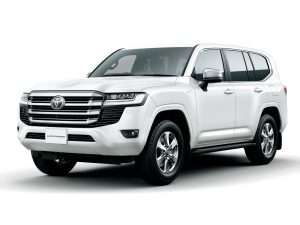
The LC300's safety technology represents one of the biggest jumps from the older Land Cruiser 200.
Toyota equipped the new generation with a comprehensive suite of driver-assistance technologies, while maintaining the fundamental passive-safety architecture expected from a modern flagship SUV.
Depending on market and grade, the LC300 can have pre-collision warning, automatic emergency braking, adaptive cruise control, lane-departure alert, lane-tracing assistance, road-sign recognition, adaptive high beams, blind-spot monitoring and rear cross-traffic alert.
The cameras and sensors are particularly valuable in Bangladesh.
A nearly two-tonne-plus SUV travelling through Dhaka traffic has plenty of blind spots, and blind-spot monitoring can provide useful additional awareness when motorcycles appear beside the vehicle.
The 360-degree camera is equally valuable when parking.
Then there is the old-fashioned safety equipment: ABS, electronic stability control, traction control, multiple airbags, ISOFIX mounts, seatbelt systems and strong structural engineering.
The LC300 is also designed to remain controllable away from paved roads.
That matters because safety in a Land Cruiser is not only about avoiding crashes.
It is also about maintaining traction and control when the road becomes mud, gravel, water or something that would make a normal crossover call its lawyer.
However, ADAS should never be treated as autonomous driving.
Sensors can be affected by rain, dirt, road markings and traffic conditions. The driver remains responsible.
For Bangladesh buyers, the best approach is to treat the LC300's safety technology as an additional layer of protection rather than a substitute for attention.