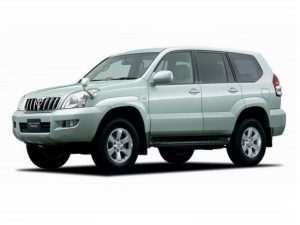
The later J90 3.0 diesel is powered by Toyota's 1KD-FTV common-rail turbo-diesel, producing 170 PS and 352 Nm. Toyota introduced this engine in July 2000 as a major upgrade over the earlier diesel powertrains.
That torque figure is what makes the J90 useful.
It is not particularly fast by today's standards, with roughly 12.5 seconds to 100 km/h, but it has enough low-speed pulling power for Bangladesh's rough roads, steep surfaces and loaded family driving.
The four-speed automatic is extremely old-fashioned now. Gear changes are slower and less numerous than a modern eight- or ten-speed transmission, but the simplicity has an upside: there is considerably less electronic complexity.
The suspension is one of the J90's strongest points. It was designed to cope with genuine rough terrain, and on Bangladesh roads that translates into good tolerance for broken surfaces, potholes and uneven roads.
Fuel economy is reasonable for a large old 4WD diesel. A healthy example should manage around 7–9 km/L in city driving and 11–13 km/L on highways.
The word “healthy” is important.
A twenty-five-year-old diesel can have tired injectors, turbo problems, worn suspension, leaking seals or transmission issues. Two identical J90s can therefore feel like completely different vehicles.
A good one feels tough, relaxed and mechanically honest.
A bad one feels like your bank account has been invited to an endurance test.