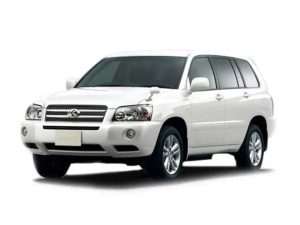
The Kluger has a respectable basic safety package for its age, but expecting modern crash-avoidance technology would be rather like asking a Nokia 3310 to run Instagram.
Toyota equipped representative versions with dual front airbags, ABS, Brake Assist, EBD, front seat-belt pretensioners and force limiters, rear three-point seat belts and child-seat attachment provisions.
An engine immobilizer and anti-theft system were also available as standard equipment on representative Japanese grades.
Side airbags were available on some versions, but they were not universally standard. This distinction is important because Bangladesh-market Klugers can come from different specifications and grades.
Modern ADAS is essentially absent.
There is no factory autonomous emergency braking, adaptive cruise control, lane-keeping assistance, blind-spot monitoring, traffic-sign recognition or automatic high-beam assistance.
That does not make the Kluger inherently unsafe.
It simply means the driver has to do the driving.
The high seating position provides good visibility, while the substantial body and SUV proportions give occupants a reassuring feeling of protection. But that should not be confused with the crash protection technology available in a modern Toyota.
For a 20-plus-year-old vehicle, condition is also a safety issue.
Worn tyres, old brake components, tired suspension, damaged airbags or poorly repaired accident structures can matter far more than the original specification.
Before buying a Bangladesh-market Kluger, inspecting the actual vehicle's airbags, ABS system, brakes, tyres, suspension and accident history is therefore essential.