Old-school safety rather than electronic babysitting
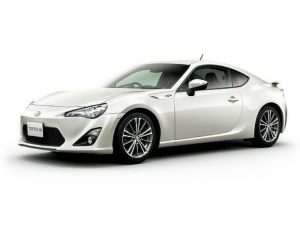
The GT86 was developed as a driver's car, but Toyota did not forget the passengers.
The ZN6 includes dual front airbags, side airbags, curtain airbags, ABS, electronic stability control, traction control, EBD, seatbelt pretensioning and a strong safety structure. Four-wheel disc brakes are used, with ventilated discs at the front and, on later specifications, ventilated discs at the rear as well.
The car's stability-control system is particularly important because this is a rear-wheel-drive coupe with enough power to make the rear axle entertaining.
There is, however, no modern Toyota Safety Sense safety net.
That means no factory autonomous emergency braking, adaptive cruise control, lane-keeping assistance or traffic-sign recognition on the normal ZN6 GT86.
For a 2026 buyer, that can feel positively prehistoric.
For an enthusiast, it is also part of the appeal.
The GT86 asks the driver to drive.
In Bangladesh, tyres are perhaps more important than another electronic acronym. A clean GT86 with quality tyres, healthy suspension, properly functioning ABS/VSC and straight chassis geometry will be much safer than a heavily modified example wearing cheap performance tyres.
The biggest real-world issue is therefore not that the GT86 lacks 2026 driver assistance.
It is that many used examples have lived interesting lives.
A pre-purchase inspection is essential.
Especially if the seller describes the car as “never driven hard”.
That phrase has historically been one of motoring's least reliable statements.
For the complete equipment breakdown, see the
full safety review and the
full specifications and features. The
full features review puts the safety kit alongside the rest of the vehicle's technology, while the
driving experience review explains how the car behaves on the road. You can also browse the
detailed image gallery,
owner reviews, and
all variants, These details give the Toyota GT86 a clearer safety picture for everyday use.