4.0 Expert Rating

Toyota Fielder Expert Review

Extensively tested and reviewed by Team CarHub

EXPERT VERDICT
"
Toyota Fielder is an exceptionally practical, economical and reliable wagon, making it one of Bangladesh's smartest family cars.
AT A GLANCE

Pros & Cons

✓
WHAT WE LIKE

Good Things

  • ✓
    Excellent fuel economy
  • ✓
    Huge luggage flexibility
  • ✓
    Proven Toyota reliability
  • ✓
    Compact city-friendly dimensions
−
WHAT COULD BE BETTER

Could Be Better

  • −
    Modest engine performance
  • −
    Aging interior design
  • −
    Basic standard equipment
  • −
    Limited rear-seat space
Toyota Fielder
— 45 Reviews
৳ 25.00 Lakh - 40.00 Lakh

Exterior

A Wagon That Refuses to Apologise for Being Practical

The Toyota Fielder has never been interested in becoming a fake SUV. Thank goodness.

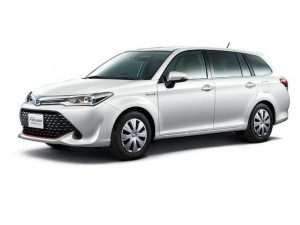
While the modern automotive industry seems determined to turn every estate car into something wearing hiking boots, the Fielder remains an honest wagon. Its long roof, relatively low body and compact dimensions are there because somebody actually wanted to carry things.

The front end is simple rather than dramatic. Later examples receive sharper lighting, a cleaner grille and projector-style LED headlights, giving the car enough modernity to avoid looking like a decade-old delivery vehicle. The rear spoiler and elongated roofline also give it a slightly sportier appearance than the average practical wagon.

At 4,400mm long and only 1,695mm wide, it is wonderfully manageable for Bangladesh. This matters enormously in Dhaka, where a large SUV can turn a perfectly ordinary parking manoeuvre into a small diplomatic crisis.

The proportions also create excellent practicality. The long roof gives the rear passengers reasonable headroom while allowing a substantial luggage compartment behind them.

The weakness is obvious: this is an old platform. Put a 2024 Fielder beside a modern Corolla Cross and the difference in visual sophistication becomes rather difficult to ignore.

There is also only around 155mm of ground clearance, so Bangladesh's speed breakers require a little respect.

But the Fielder's exterior succeeds because it doesn't pretend to be something it isn't.

It is a practical Japanese wagon.

And it wears that badge proudly. For more visual detail, open the detailed image gallery. The full specifications and features gives the key dimensions and exterior equipment in one place. Toyota Fielder  stands out through the combination of its proportions, lighting and wheel package, which matter when choosing a car you will see every day.

Interior

Simple, Functional and Surprisingly Useful

Inside, the Fielder follows the same philosophy as its exterior: functionality first, theatre later.

The dashboard is straightforward, the controls are easy to understand and the driving position provides good visibility. There is nothing particularly intimidating about getting behind the wheel, which is exactly what you want when the daily journey involves traffic, school runs and parking spaces designed by someone with a personal hatred of cars.

The cabin isn't enormous, but the packaging is clever. Five passengers can travel comfortably enough, while the long wagon roof helps create useful rear-seat headroom.

The real party trick is behind the rear seats.

The Fielder's luggage compartment is one of the reasons people continue buying it. Toyota's hybrid packaging preserved useful cargo volume despite adding the battery system, and the rear seats fold to create a considerably larger load area.

That makes it excellent for family shopping, airport luggage, business equipment and road trips.

But Time Has Not Been Kind

The interior design is clearly from an older generation of Toyota. Materials are functional rather than luxurious, screens are smaller than today's expectations and the standard equipment of lower grades can feel surprisingly basic.

Bangladesh-market imported examples often solve this with aftermarket Android screens, reverse cameras and upgraded audio systems. That can be useful, but buyers should distinguish factory equipment from dealer modifications.

The Fielder is therefore not the car for someone wanting a futuristic cabin.

It is the car for someone who wants everything to work, everything to fit, and nothing to require a university degree.

Features

The Clever Bits Are the Practical Bits

The Fielder's strongest equipment isn't necessarily the equipment that looks impressive in a showroom.

The hybrid system is the obvious example. Toyota's 1NZ-FXE engine and electric motor work together through an e-CVT, delivering smooth low-speed driving and excellent efficiency. Toyota rates the 2024–2025 Hybrid EX at 27.8 km/L under WLTC testing.

Then there are the mundane features that become surprisingly valuable: power windows, automatic air-conditioning, rear wiper, split-folding rear seats, USB connectivity, LED headlights, rear spoiler and Toyota's safety equipment.

Later Fielder models also benefit from Toyota Safety Sense, including pre-crash safety and lane-departure warning-related functions. Toyota made the safety package standard on the later model.

But the equipment list needs context.

This is not a modern luxury Toyota. Wireless charging, large infotainment displays, factory Apple CarPlay, ventilated seats, panoramic cameras and sophisticated connected services are not the Fielder's strengths.

The standard Hybrid EX can actually feel rather basic compared with the price of some heavily equipped Bangladesh imports.

That is where the aftermarket becomes useful. A good Android head unit, reverse camera and parking sensors can modernise the ownership experience considerably.

The important thing is to avoid paying a premium for aftermarket accessories while believing they are factory equipment.

The Fielder's best technology remains the hybrid drivetrain and its excellent practicality.

And frankly, those are the bits that matter.

Safety

Sensible Safety Rather Than Technology Theatre

The Fielder's safety story is stronger than its age might suggest.

The later model includes Toyota Safety Sense, while the underlying safety package includes ABS, Brake Assist, EBD, VSC, traction control, airbags and three-point seat belts. Toyota's official 2024–2025 specification confirms driver, passenger and side airbags, ABS, traction control, Brake Assist, EBD, VSC and rear three-point belts as standard on the Hybrid EX.

The addition of Toyota Safety Sense is particularly useful. Pre-Crash Safety can help detect an impending collision, while lane-departure warning provides another layer of assistance.

However, there is a very important distinction.

This is not the same level of ADAS sophistication found in a new-generation Corolla, Crown or Lexus. The Fielder's platform dates back much further, and equipment such as blind-spot monitoring, rear cross-traffic alert and advanced parking assistance is not universally standard.

Bangladesh Changes the Equation

In Bangladesh, real-world safety depends heavily on vehicle condition.

A Fielder with functioning airbags, good tyres, properly maintained brakes and an undamaged chassis is preferable to a newer example that has suffered a serious accident and been poorly repaired.

The wagon's compact width is another practical safety advantage in urban environments. It is easy to position on narrow roads and relatively easy to park.

The brakes use ventilated discs at the front and drums at the rear. That sounds rather old-fashioned, but it is perfectly normal for a lightweight, economy-focused wagon.

The biggest safety limitation is not the basic equipment.

It is age.

The Fielder is fundamentally a mature Japanese platform rather than a cutting-edge safety showcase.

For a family buyer who understands that distinction, however, it remains a sensible and dependable choice. For the complete equipment breakdown, see the full safety review and the full specifications and features. The full features review puts the safety kit alongside the rest of the vehicle's technology, while the driving experience review explains how the car behaves on the road. You can also browse the detailed image gallery, owner reviews, and all variants. These details give the Toyota Fielder default a clearer safety picture for everyday use.

Driving Experience

Efficiency Before Excitement

Driving the Fielder Hybrid is a little like hiring a very competent accountant to race a Ferrari.

It is not going to happen.

The 1.5L hybrid produces approximately 100 hp system output, which tells you almost everything you need to know about its priorities. Toyota wanted low fuel consumption, smooth operation and dependable everyday performance rather than neck-snapping acceleration.

In Dhaka traffic, this approach works brilliantly.

The electric motor gives the car smooth initial response, while the e-CVT keeps the engine operating efficiently. There are no conventional gear changes, no hunting for the correct ratio and very little drama.

This is particularly pleasant when crawling through congestion. Instead of constantly changing gears, the drivetrain simply gets on with the job.

On highways, the Fielder is perfectly competent. It can cruise comfortably, and the long wagon body gives it good stability. Overtaking, however, requires realistic expectations. You have roughly 100 hp moving a family, luggage and fuel, so planning is advisable.

The ride is generally comfortable, although the suspension can feel busy over badly broken roads.

The 4.9m turning radius is excellent for city use, and the relatively narrow body makes parking much easier than in a crossover or SUV.

Fuel economy is the real star. A properly maintained Hybrid Fielder can realistically deliver around 20–24 km/L combined in Bangladesh, with careful highway driving potentially exceeding that.

So no, it isn't exciting.

But when fuel prices are involved, “boring and economical” suddenly sounds rather intelligent.
EXPLORE THE RANGE

Variants

Hybrid EX Is the One to Buy

For 2022–2025, the Fielder lineup is unusually straightforward compared with older generations.

Toyota continued the mature E160/E165G wagon with EX and Hybrid EX grades. The Hybrid EX uses the 1.5L 1NZ-FXE system and FWD, while petrol EX versions use conventional 1.5L engines and are available with different transmission and drivetrain configurations depending on specification. Toyota's 2024–2025 catalogue lists Hybrid EX alongside petrol EX versions with CVT, 5MT and 4WD configurations.

The Hybrid EX is the obvious Bangladesh choice for urban users. It is smooth, economical and extremely well suited to Dhaka's stop-start traffic.

The standard petrol EX makes more sense for someone who wants a conventional powertrain or prefers to avoid hybrid battery concerns. It is also available with 4WD in the Japanese lineup, although that configuration is much less relevant to most Bangladesh buyers.

Older Fielder generations had more interesting grades such as G, Hybrid G and WxB, with considerably more styling and equipment. But those should be treated as older-generation variants rather than mixed into the 2022–2025 database.

The Fielder's biggest problem is therefore not its mechanical ability.

It is the age of the platform.

At around Tk 25–40 lakh in Bangladesh, buyers naturally compare it against newer crossovers and hatchbacks. Those cars can offer more modern interiors and technology.

But they cannot necessarily match the Fielder's combination of wagon practicality, compact dimensions, hybrid economy, Toyota reliability and low running-cost potential.

For a Bangladesh buyer who values those things, the Hybrid EX remains an unusually sensible choice.
TRENDING

Trending Toyota Cars

View All Toyota Cars
FAQ

Toyota Fielder Questions & Answers

Toyota Fielder price in Bangladesh is approximately Tk 25 lakh–Tk 40 lakh, depending on different model trim and options.

View All Toyota Fielder FAQs
📍

Find Dealers Near You

Looking for Toyota Fielder ? We will notify you when verified dealers become available.

💳

Calculate Your Car EMI

Estimate your monthly payment for Toyota Fielder

৳ 30,00,000
৳5L ৳1Cr
৳ 5,00,000
৳0 ৳30L
9%
5% 18%
5 Years
1 Year 7 Years
Your Monthly EMI ৳ 64,250 Estimated payment per month
Principal Amount ৳ 30,00,000
Total Interest ৳ 7,68,000
Total Payment ৳ 37,68,000