4.5 Expert Rating

Toyota Fielder G Expert Review

Extensively tested and reviewed by Team CarHub

EXPERT VERDICT
"
Toyota Fielder Hybrid is an exceptionally practical, economical and reliable family wagon, especially for Bangladesh's congested urban roads.
AT A GLANCE

Pros & Cons

✓
WHAT WE LIKE

Good Things

  • ✓
    Excellent hybrid fuel economy
  • ✓
    Proven Toyota reliability
  • ✓
    Spacious practical wagon
  • ✓
    Easy city driving
−
WHAT COULD BE BETTER

Could Be Better

  • −
    Outdated cabin technology
  • −
    Modest acceleration
  • −
    Small fuel tank
  • −
    Limited luxury equipment
Toyota Fielder G
— 44 Reviews
৳ 24.00 Lakh - 30.00 Lakh

Exterior

A wagon that quietly makes sense

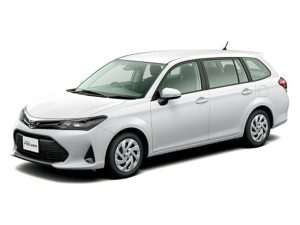
The Toyota Fielder has never been interested in becoming automotive theatre. It is a wagon, and it looks like one — long roof, practical rear end and dimensions that seem deliberately designed by somebody who has actually tried parking in Tokyo. In Bangladesh, that turns out to be rather clever. At 4,400mm long and 1,695mm wide, the latest Fielder remains compact enough for Dhaka's increasingly ridiculous traffic. The 1,475mm height gives it a useful wagon stance without turning it into an SUV cosplay exercise. The design was refreshed during its long production life, and later cars gained a cleaner grille, sharper lighting and more contemporary detailing. The latest Hybrid EX gets projector-style LED headlamps, a rear spoiler and a generally neat exterior package. It is not glamorous, but it is considerably more modern-looking than the earlier generations. The proportions are the real triumph. The roof stretches almost all the way to the rear, giving the Fielder a proper estate-car silhouette. That means luggage space rather than a decorative roofline. Bangladesh buyers may also appreciate the restrained appearance. It does not scream “expensive imported car” from three streets away, yet it looks substantially more purposeful than a basic economy hatchback. The only problem is that modern crossovers have convinced everyone that a car must look like it is preparing to climb Mount Everest. The Fielder refuses to participate. And frankly, good. It looks practical because it is practical.

Interior

Functional Japanese simplicity

Inside, the Fielder follows the same philosophy as outside: make everything useful, then stop. The driving position is straightforward, visibility is good and the controls are familiar. Toyota's decision to keep the dashboard conventional is actually welcome in a market where some cars now require a touchscreen menu merely to adjust something that should have a physical button. The cabin provides respectable room for five people, although rear-seat comfort is better described as practical than luxurious. The wagon body makes the biggest difference. Folding the rear seats transforms the rear section into a genuinely useful loading area, making the Fielder particularly attractive to Bangladeshi families who travel with luggage, shopping or equipment. The later cars have improved trim and small touches such as USB charging, while automatic climate control and power windows make everyday driving easy. But this is not a luxury car. The plastics are fairly ordinary, the dashboard design is conservative and there is no panoramic digital cockpit waiting to impress your passengers. Even the factory infotainment situation feels dated compared with newer Toyotas. Fortunately, Bangladesh owners have a solution: aftermarket Android head units are everywhere. Add a good-quality unit and reverse camera and the cabin becomes much more usable. Just remember that an aftermarket screen does not make the underlying car newer. The Fielder's interior is ultimately successful because it wastes very little space. It is comfortable enough, easy to operate and exceptionally practical. That is precisely what most buyers actually need.

Features

Practical technology rather than gadget overload

The latest Fielder is an interesting mixture of old-school practicality and relatively modern safety technology.

You get the important everyday equipment: automatic air-conditioning, power windows, central locking, adjustable steering, keyless functionality, USB charging and split-folding rear seats. The 2022 update also added projector-style LED headlights and USB Type-C charging as standard across the range.

Then there is Toyota Safety Sense.

This is where the car becomes more sophisticated than its deliberately conservative appearance suggests. Pre-Collision Safety with pedestrian detection and Lane Departure Warning bring genuine driver-assistance capability that older Fielder generations simply did not have.

However, do not expect a Lexus.

There is no factory Apple CarPlay or Android Auto in the conventional modern sense, no wireless charging, no enormous touchscreen and no luxury rear entertainment system. Navigation is also not something to assume on the current EX.

For Bangladesh, this is not necessarily a disaster. A quality aftermarket infotainment system can provide Bluetooth, navigation, Android Auto, Apple CarPlay and a reverse camera for comparatively little money.

The important distinction for CarHub is therefore factory versus aftermarket equipment.

A Bangladesh-market Fielder may arrive looking like it has more technology than a small spaceship, but much of that equipment may have been installed by the importer.

The genuinely valuable factory features are the hybrid system, e-CVT, automatic climate control, LED lighting, practical wagon layout and Toyota Safety Sense.

Those are the things worth buying the car for.

Safety

Much better than the old Fielder

Safety is one area where the latest Fielder deserves credit. Earlier Fielder generations were fundamentally products of their time, with ABS, airbags and electronic braking assistance but little in the way of modern driver assistance. The later cars are different. Toyota Safety Sense brings forward-collision protection and pedestrian detection, while Lane Departure Warning adds another layer of assistance. The car also has VSC, traction control, ABS, Brake Assist and EBD, giving it a much stronger active-safety package than an older 2006–2012 Fielder. The Hybrid EX also has driver and passenger airbags plus side airbags. Rear three-point belts and child-seat provisions further improve everyday family safety. But there is an important caveat. This is still an ageing platform underneath the technology. It does not have the huge structural sophistication, extensive sensor suite or broad ADAS capability of Toyota's newest TNGA-based cars. There is no reason to pretend otherwise. You also do not get every fashionable electronic safety feature. Blind-spot monitoring, adaptive cruise control, 360-degree cameras and sophisticated rear cross-traffic collision avoidance should not be assumed. For Bangladesh, tyre condition matters enormously. A car with excellent Toyota Safety Sense but four cheap, worn tyres is not suddenly safe. Neither is an accident-repaired chassis simply because the dashboard has no warning lights. A properly maintained Fielder Hybrid is nevertheless a reassuring family car. It is not a five-star luxury safety fortress, but compared with older used Japanese wagons, the improvement is substantial.

Driving Experience

Smoothness is the entire point

Drive the Fielder Hybrid expecting a sports car and you will be disappointed. Drive it expecting an economical Japanese family wagon and it makes considerably more sense.

The 1.5L 1NZ-FXE works with an electric motor and e-CVT, producing roughly 100 hp system output. That does not sound spectacular, and it isn't. But the electric motor gives the car useful low-speed response, making it particularly pleasant in Dhaka traffic.

There is no traditional gear shifting. The e-CVT simply manages the engine and electric motor continuously, which makes crawling through congestion remarkably smooth.

And that matters in Bangladesh.

When you're sitting behind a bus, beside a CNG, with a rickshaw appearing from an angle that shouldn't be physically possible, you don't need paddle shifters. You need a car that moves smoothly, doesn't overheat, and doesn't consume fuel like a small aircraft.

The Fielder understands this.

The suspension is tuned for comfort rather than aggression. On normal roads it is composed and easy-going, while the wagon body remains stable enough on highways. Long journeys are comfortable provided you remember that this is still a compact family car rather than a Crown.

Fuel economy is the star. A healthy hybrid can realistically deliver around 17–21 km/L in city conditions and more on open roads.

The weakness is acceleration. When heavily loaded with passengers and luggage, the 1.5L system is perfectly adequate but never exciting.

Yet that is hardly a criticism.

The Fielder's greatest driving achievement is making ordinary driving wonderfully uneventful.
EXPLORE THE RANGE

Variants

The grade naming needs careful attention

This is where the Fielder database needs particular care.

Historically, Toyota offered grades such as Hybrid G, Hybrid G W×B, Hybrid, 1.5G, 1.5X and other versions. These grades changed over the years, and Toyota eventually simplified the final-generation Japanese-market lineup.

For 2022–2025, the correct factory lineup is Hybrid EX and EX, not Hybrid G. Toyota's official records show the 2022–2024 range with Hybrid EX, petrol EX CVT, petrol EX manual and 4WD petrol EX. The 2024–2025 range continued with Hybrid EX and EX variants.

That distinction matters for CarHub because Bangladesh importers sometimes use familiar grade names loosely. If a dealer advertises a 2022 Fielder as “G,” the chassis/model code and Japanese auction documentation should determine the actual factory grade.

For a Bangladesh buyer, I would choose the Hybrid EX over the petrol EX when the price difference is sensible. The hybrid offers much better real-world fuel economy and is particularly well suited to Dhaka's stop-start traffic.

The petrol EX makes more sense for buyers who want simpler mechanical architecture and lower purchase cost.

The older genuine Hybrid G/W×B cars are also attractive if you find a clean example with verified history.

Overall, the Fielder remains one of those rare cars whose strongest selling points are not fashionable. It is efficient, practical, reliable and easy to live with.

In Bangladesh, that combination is far more valuable than a fashionable badge.
TRENDING

Trending Toyota Cars

View All Toyota Cars
FAQ

Toyota Fielder G Questions & Answers

The Toyota Fielder G Hybrid price in Bangladesh is approximately Tk 24–30 lakh for recent reconditioned models, depending on model year, auction grade, mileage, condition and importer.

View All Toyota Fielder G FAQs
📍

Find Dealers Near You

Looking for Toyota Fielder G ? We will notify you when verified dealers become available.

💳

Calculate Your Car EMI

Estimate your monthly payment for Toyota Fielder G

৳ 30,00,000
৳5L ৳1Cr
৳ 5,00,000
৳0 ৳30L
9%
5% 18%
5 Years
1 Year 7 Years
Your Monthly EMI ৳ 64,250 Estimated payment per month
Principal Amount ৳ 30,00,000
Total Interest ৳ 7,68,000
Total Payment ৳ 37,68,000