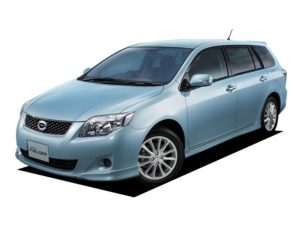
Safe enough for its era, dated by today's standards
Safety is where the Fielder's age becomes impossible to disguise.
The second-generation car benefited from equipment such as dual front airbags, ABS, Brake Assist and EBD on relevant factory configurations. Seat-belt pretensioners, force limiters and child-seat mounting provisions were also available. Better-equipped versions could offer side airbags.
That was respectable equipment for its period.
But today's standards are much higher. There is no modern Toyota Safety Sense suite here. You do not get factory autonomous emergency braking, adaptive cruise control, lane-keeping assistance, blind-spot monitoring, traffic-sign recognition or sophisticated rear cross-traffic collision avoidance.
Electronic stability control is also not something that should be assumed on these cars.
The real-world safety picture in Bangladesh therefore depends heavily on the individual vehicle. A straight, accident-free chassis with properly functioning ABS, good tyres, healthy suspension and original airbags is considerably preferable to a heavily modified example with questionable repairs.
Brakes are conventional — ventilated discs at the front and drums at the rear on common 1.5L configurations. They are adequate for the vehicle's performance and weight, but this is not a car designed around modern high-performance braking systems.
So, is a Fielder unsafe? No. For its generation, it had sensible passive and braking safety equipment. But compared with a modern Toyota, its active safety technology is ancient.