4.5 Expert Rating

Toyota Esquire Expert Review

Extensively tested and reviewed by Team CarHub

EXPERT VERDICT
"
Toyota Esquire is a comfortable, spacious and economical family MPV offering excellent practicality, especially for large families.
AT A GLANCE

Pros & Cons

✓
WHAT WE LIKE

Good Things

  • ✓
    Spacious seven-seat cabin
  • ✓
    Excellent hybrid economy
  • ✓
    Comfortable family ride
  • ✓
    Easy sliding-door access
−
WHAT COULD BE BETTER

Could Be Better

  • −
    Slow hybrid acceleration
  • −
    Aging interior technology
  • −
    Costly hybrid repairs
  • −
    Limited ground clearance
Toyota Esquire
— 40 Reviews
৳ 22.00 Lakh - 47.00 Lakh

Exterior

A Mini Alphard With A Practical Agenda

The Toyota Esquire was never designed to win a beauty contest against a Ferrari.

It had a much more sensible ambition: make a compact Japanese MPV look expensive.

And surprisingly, it works.

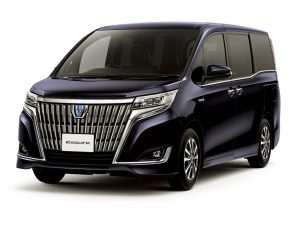
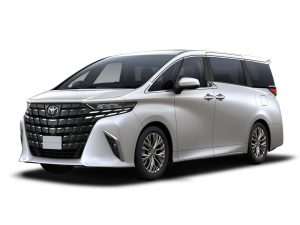
The tall body, large grille and chrome detailing give the Esquire a more upscale appearance than the closely related Noah and Voxy. It looks particularly convincing in Gi and Gi Premium specification, where the additional exterior detailing gives the MPV a proper executive character.

The proportions are practical rather than sporty. At 4,695mm long and 1,695mm wide, it remains narrow enough for Japanese urban roads and, conveniently, many Bangladesh streets that seem to have been designed before cars became enormous. Toyota's official specifications confirm the 4,695 × 1,695mm footprint.

The tall roof is the real story.

It creates enormous headroom and makes getting into the second and third rows much easier than in a conventional SUV.

The sliding rear doors are also brilliant in tight parking spaces. You can open them without smashing the neighbouring car, which is a surprisingly useful feature when visiting a Dhaka shopping centre.

The design has aged reasonably well. Later facelift and Black-Tailored versions look more sophisticated, while early models have a simpler appearance.

The Esquire will never be mistaken for a sports car.

But it doesn't need to be.

It looks like a comfortable, expensive family machine.

And frankly, that is exactly what it is. For more visual detail, open the detailed image gallery. The full specifications and features gives the key dimensions and exterior equipment in one place. Toyota Esquire 1.8 Hybrid stands out through the combination of its proportions, lighting and wheel package, which matter when choosing a car you will see every day.

Interior

Space Is The Entire Point

Inside the Esquire, Toyota has followed the oldest rule in the MPV handbook: give people somewhere to put their knees.

The cabin is tall, spacious and exceptionally practical. Seven passengers can be accommodated across three rows, and the second-row seating provides the sort of space that makes long family journeys considerably less painful.

Getting into the third row is also much easier than climbing into the back of many SUVs.

The sliding doors are a gift for families. Children can get in and out without swinging a door into another vehicle, while elderly passengers benefit from the wide opening.

Higher grades such as Gi Premium add a more luxurious atmosphere with better upholstery, trim and convenience equipment.

The dashboard itself is functional rather than spectacular. Later versions received improved multimedia and equipment, but the basic interior architecture dates from an earlier period than today's giant-screen Toyota cabins.

That means the Esquire feels comfortable rather than technologically dazzling.

The seating flexibility is its real party trick.

Fold and rearrange the rear seats and the cabin can transform from passenger carrier to luggage transporter with very little drama.

The hybrid battery's placement under the front seats also helps preserve useful interior space. Toyota specifically highlighted this packaging approach when introducing the Esquire.

The main weakness is luggage space when all seven seats are occupied.

But that is true of almost every compact three-row MPV.

The Esquire's interior isn't about showing off.

It is about making seven people comfortable.

Features

Clever Rather Than Excessively Clever

The Esquire's equipment list depends heavily on year and grade, but the overall philosophy is refreshingly practical.

You get power windows, automatic climate control, keyless entry, push-button starting, rear air-conditioning, cruise control and a range of multimedia options.

Higher grades add leather-style or leather upholstery, power sliding doors, better lighting, premium navigation systems and additional convenience equipment.

Toyota also offered T-Connect navigation, voice interaction, Apps and Online Care on selected configurations, showing that the Esquire was more technologically ambitious than its slightly old-fashioned appearance suggests.

The practical features matter most.

The sliding doors are superb in tight parking spaces. Rear climate control is invaluable when carrying a full family in Bangladesh's summer heat. Multiple cup holders, storage areas and flexible seating make the cabin easy to live with.

The hybrid version adds another useful feature: excellent low-speed efficiency.

There are some things the Esquire doesn't do particularly well by modern standards.

Apple CarPlay and Android Auto availability depends on the infotainment unit and model year, while Japan-specific navigation and connected services can be awkward after importation.

And compared with a modern Toyota, the screens and driver-assistance systems are beginning to show their age.

But that isn't necessarily a deal-breaker.

The Esquire was designed before cars became rolling smartphones.

It focuses on making passengers comfortable.

And when seven people are sitting inside your vehicle, that is arguably more important than having an enormous screen displaying weather information from Tokyo.

Safety

Sensible Protection, But Age Matters

The Esquire's safety equipment was respectable for its era, but this is an area where buyers must remember that a 2014 car and a 2021 car are not technologically identical.

ABS, brake assist, airbags, stability control, traction control and seatbelt protection form the basic safety foundation.

Toyota also offered advanced safety and parking technology on selected versions. The model history specifically mentions Intelligent Parking Assist, wide-angle colour rear-view monitoring and T-Connect safety/online services as available equipment.

Later model years and higher grades received improved driver-assistance technology.

But you should not buy a used Esquire assuming that every car has modern adaptive cruise control, automatic emergency braking, blind-spot monitoring and a 360-degree camera.

Those systems vary according to year, grade and package.

For Bangladesh, the physical safety condition may actually matter more.

Inspect the chassis for accident repairs. Check airbags and warning lights. Make sure the ABS and stability-control systems function correctly. Examine the brakes, tyres and suspension.

A properly repaired accident is one thing.

A poorly repaired accident is another.

The tall MPV body also benefits from its excellent visibility, while the relatively narrow width makes positioning easier in city traffic.

For family use, the Esquire remains reassuring.

But newer versions are clearly preferable if advanced electronic driver assistance is a priority.

In short, it is safe enough for its generation.

Just don't expect 2021 technology from a 2014 car. For the complete equipment breakdown, see the full safety review and the full specifications and features. The full features review puts the safety kit alongside the rest of the vehicle's technology, while the driving experience review explains how the car behaves on the road. You can also browse the detailed image gallery, owner reviews, and all variants, These details give the Toyota Esquire 1.8 Hybrid a clearer safety picture for everyday use.

Driving Experience

It Drives Like A Living Room

Nobody buys a Toyota Esquire because they want to attack corners. If you do, I recommend buying a Mazda instead. The Esquire's mission is comfort, smoothness and effortless family transportation. The 1.8L hybrid is the most interesting version for Bangladesh. Its Atkinson-cycle engine works with Toyota's hybrid system and e-CVT, producing approximately 136 hp system output. The petrol engine itself makes 99 PS and 142 Nm. At low speeds, it is wonderfully smooth. The electric motor helps the car pull away quietly, while the e-CVT removes conventional gear changes from the equation. This is exactly what you want in Dhaka traffic. The 2.0L petrol version is stronger in conventional acceleration, producing 152 PS and 193 Nm, but it sacrifices the hybrid's fuel-efficiency advantage. Ride comfort is generally excellent. The suspension is soft enough to absorb ordinary road imperfections, while the tall body gives passengers a relaxed view of traffic. On highways, the Esquire is a very pleasant family cruiser. The weakness is handling. Push hard into a corner and the tall body reminds you that Sir Isaac Newton remains employed. There is body roll, and the steering is designed more for easy manoeuvring than enthusiastic driving. But nobody should care. The Esquire is about arriving with seven people, luggage and everyone's sanity still intact. And in that department, it does a remarkably good job.
EXPLORE THE RANGE

Variants

Choosing Between Hybrid And Petrol

The Esquire range can look confusing because Toyota offered multiple grades, powertrains and seating configurations throughout its life.

The principal grades included Xi, Gi and Gi Premium, with hybrid versions such as Hybrid Xi and Hybrid Gi. Toyota's official model history confirms both the 1.8L hybrid and 2.0L petrol engines, as well as 7- and 8-seat configurations and FF/4WD choices.

The Xi is the value-oriented version. It gives you the Esquire's fundamental space and practicality without paying for every luxury feature.

The Gi is the sweet spot for most buyers. It offers a better equipment balance and is widely available in Bangladesh.

The Gi Premium is the choice for buyers who want a more luxurious cabin and additional convenience features.

Then you have the powertrain decision.

The 1.8L Hybrid is my recommendation for most urban Bangladesh buyers. It is smoother and substantially more economical in traffic.

The 2.0L petrol makes more sense if you want stronger conventional performance or prefer avoiding hybrid-system components.

There are also 4WD versions, but the majority of buyers should not pay extra simply for the badge unless they genuinely need the additional traction.

For a family, I'd choose a clean Gi Hybrid.

It gives you the Esquire's greatest strengths: space, comfort, sliding doors, Toyota reliability and respectable fuel economy.

It isn't glamorous.

It isn't fast.

It isn't trying to be.

It is simply a very clever machine for moving people.

And sometimes that is exactly what a car should do.
TRENDING

Trending Toyota Cars

View All Toyota Cars
POPULAR

Popular MPVs

View All MPVs
FAQ

Toyota Esquire Questions & Answers

Toyota Esquire price in Bangladesh is approximately Tk 22 lakh to Tk 47 lakh for used models.

View All Toyota Esquire FAQs
📍

Find Dealers Near You

Looking for Toyota Esquire ? We will notify you when verified dealers become available.

💳

Calculate Your Car EMI

Estimate your monthly payment for Toyota Esquire

৳ 30,00,000
৳5L ৳1Cr
৳ 5,00,000
৳0 ৳30L
9%
5% 18%
5 Years
1 Year 7 Years
Your Monthly EMI ৳ 64,250 Estimated payment per month
Principal Amount ৳ 30,00,000
Total Interest ৳ 7,68,000
Total Payment ৳ 37,68,000